Subways near AIIMS Delhi become nightshelter for kins of admitted patients
As Delhi’s winter worsens, patients unable to afford beds near AIIMS sleep in subways. Scenes of cancer patients in squalor expose deep inequities and question the promise of public healthcare.
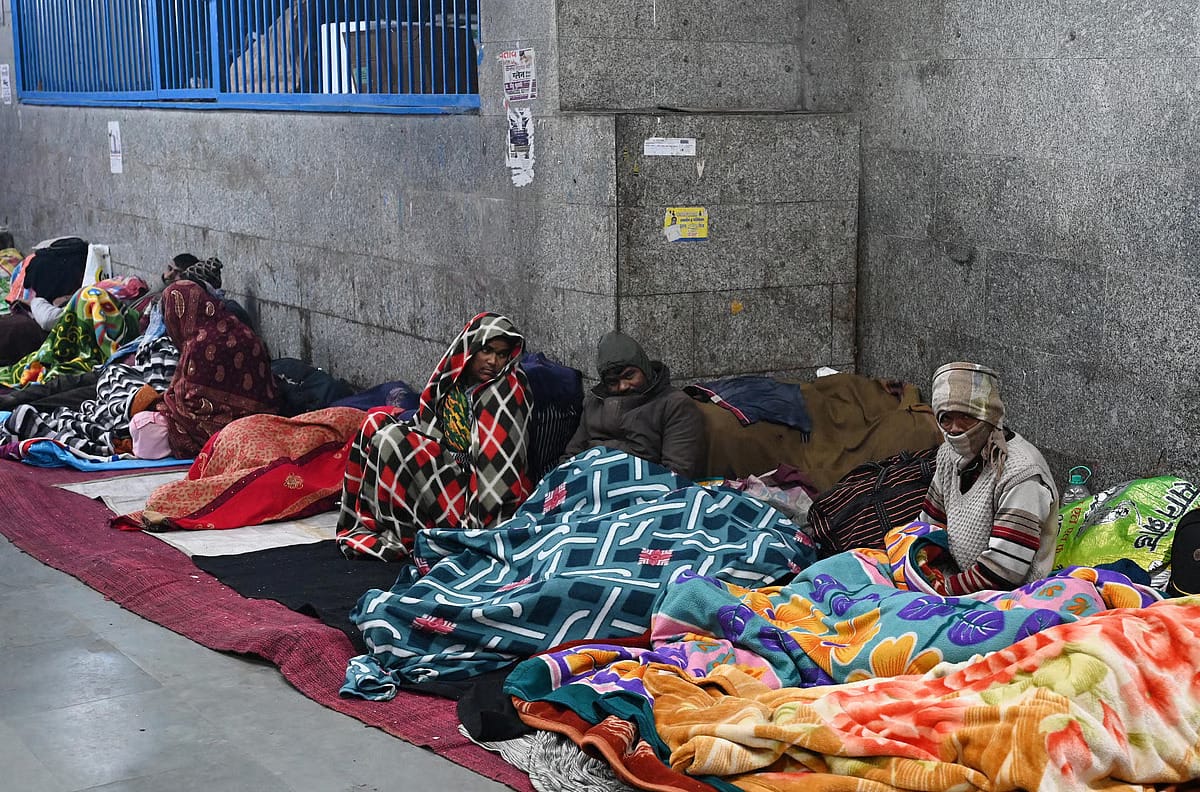
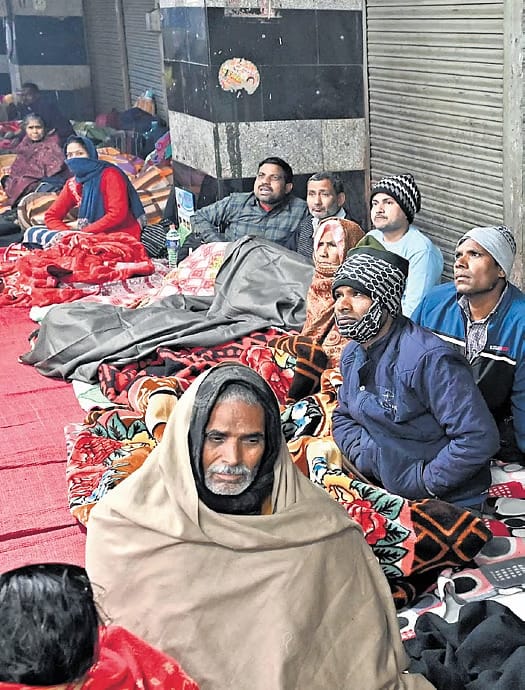
With the ever-increasing chill of winter in Delhi, subways located around AIIMS Delhi have turned into make-shift shelters for patients and their attendants who cannot afford inpatient accommodation, exposing a stark contradiction within India’s foremost medical research institution. In a social media post that has garnered the attention of netizens, a cancer patient was seen enduring the bitter cold of Delhi. The patient, undergoing a third round of chemotherapy and recovering from a recent eye surgery, was found lying on a thin plastic sheet, covered with a worn-out blanket.
Around her are patients and attendants lying on the grimy floor, having nowhere else to go. A man is taking in tea through a tube inserted into his nose due to arthritis in his mouth rendering him incapable of eating and drinking normally. Others quietly ask passersby for blankets. It was evident that the unsanitary conditions of the floor made it hard for patients to stay there, while the disgusting smell drove others away entirely. Many patients were so tired that they could not speak out against it.
An article of the New Indian Express recounts the distressing story of Amrita from Kasganj, Bihar. She had left her three-year-old daughter in her in-laws' care to come to Delhi with her 14-year-old daughter for treatment of her eye tumor. Showing her daughter’s bandaged face and complete hair loss, Amrita stated that it was her daughter's fourth chemotherapy session until the final checkup which was scheduled 12 days from then. She recounted the horrors she faced while staying in Delhi for her daughter's treatment, stating that they were repeatedly displaced from one place to another until they ended up in the subways. But even in the subways, they were shooed away by the officials. She further said, “Today, we were finally moved to a newly built pagoda tent,” adding that while food is being provided, access to washrooms remains the most pressing concern.
Patients and their attendants taking shelter inside a subway near AIIMS Metro | Courtesy Parveen Negi for The New Indian Express
Incidents like these expose the ironical relaities of India's national capital where needy patients are relegated to animal-like conditions while battling with life threatening diseases and enduring the harsh delhi weather all at the same time. Their struggle becomes not only medical but existential, raising troubling questions about access, equity, and the true meaning of public healthcare in urban India.
Share this article
The link has been copied!
Members Discussion
Your link has expired. Please request a new one.
Your link has expired. Please request a new one.
Your link has expired. Please request a new one.
Great! You've successfully signed up.
Great! You've successfully signed up.
Welcome back! You've successfully signed in.
Success! You now have access to additional content.
What’s Coming Next?
Explore our upcoming features, author interviews, and deep-dives into new policy reforms.