Urgent Search For Wild Tusker Chakkakomban: What Happened in Keralam?
Keralam's Forest Department has launched Mission Chakkakomban to tranquilise and radio-collar the wild tusker following repeated incursions into human settlements in Idukki.

Keralam's Forest Department has launched Mission Chakkakomban to tranquilise and radio-collar the wild tusker following repeated incursions into human settlements in Idukki.
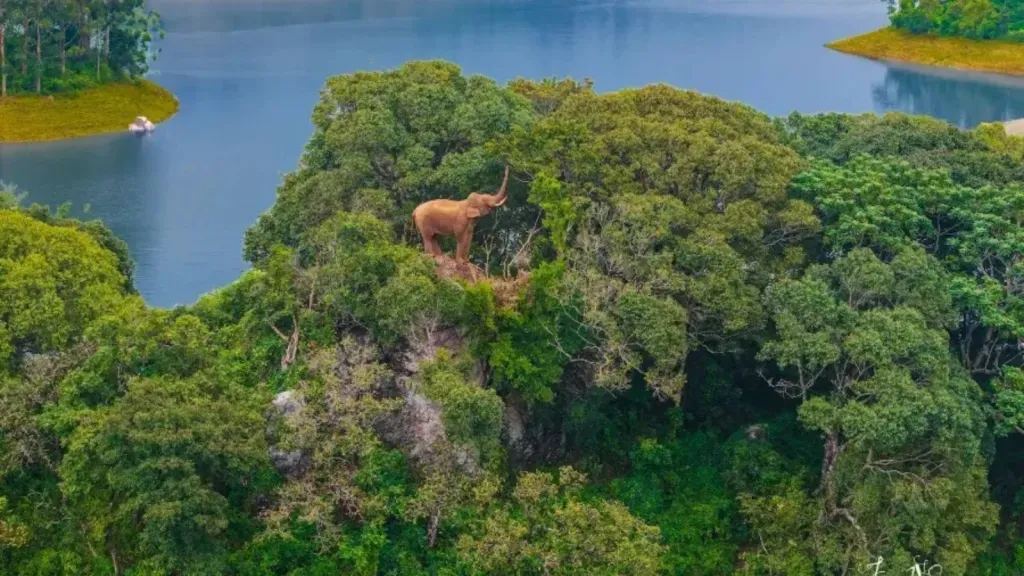
A major wildlife operation is underway in Keralam's Idukki District as forest officials attempt to tranquillise and radio-collar Chakkakomban, a wild tusker whose repeated incursions into human settlements have raised safety concerns. Dubbed 'Mission Chakkakomban', the operation involves around 140 personnel, 2 trained kumki elephants, and specialised surveillance and equipment, while disrupting daily life in parts of Chinnakanal.
Chakkakomban, a 25-year-old wild tusker named for its fondness for jackfruits, has raided human settlements in Keralam’s Idukki district for six years, damaging crops. Reportedly responsible for trampling two individuals in the last three years, including an incident in September 2026, and implicated in the death of another wild elephant, its repeated incursions have triggered public protests, leading the forest department to mandate its tranquillisation and collaring.
Chakkakomban is reportedly one of the 17 wild tuskers currently roaming the region and is not the first to have caused such concern; Arikomban, named for his affinity for rice, similarly raided human settlements before being captured and relocated in 2023. (Credit: The Indian Express)
Mission Chakkakomban began on November 25, with the Forest Department deploying ~140 personnel, including veterinary surgeons and rapid response teams, two trained kumki elephants from Muthanga, drones, night cameras and ground surveillance to track the tusker. The plan is to tranquillise it in a safe area, examine it, fit a GPS radio-collar and release it. Darting near water or steep terrain is avoided to prevent drowning.
STORY | Two kumki elephants deployed to radio-collar wild tusker in Idukki
— Press Trust of India (@PTI_News) November 23, 2026
Two trained kumki elephants were brought to Chinnakanal here on Monday as part of efforts to tranquilise and radio-collar wild elephant Chakkakomban, which has allegedly become a threat to human lives in… pic.twitter.com/0vVqK5Mzi5
Wednesday’s 3:45 PM attempt in Omanakkuzhi failed when a dart did not penetrate the elephant's skin; a subsequent attempt was aborted after Chakkakomban charged at staff before retreating towards the Anayirangal dam. Rain and fog suspended operations for the rest of the day. Resuming at 4 AM on November 26 near Kudi with the kumki Elephants, the Forest Department plans to tranquillise the tusker only in safe terrain, prioritising safety during radio-collaring. (Credit: The South First)
The operation disrupted daily life in Chinnakanal, prompting precautionary measures. The Idukki administration has since declared a holiday for schools, Anganwadis, professional colleges, and tuition centres across six wards (1, 2, 9, 10, 11, and 12). Curfews were extended, and drones, night cameras and camera traps were restricted in the zone. Hospitals were told to maintain staff, ambulances and emergency services, while tourism centres were closed. (Credit: Onmanorama)
Residents are divided: some demand Chakkakomban’s relocation, arguing radio tracking alone won’t mitigate risks, while others accept the elephant’s presence. Metro Vaartha reports that 65-year-old Mariyamma of Chinnakanal, living alone, views the elephant as protective, deterring thieves. Her account contrasts the elephant as both a threat and a familiar presence.
Also Read: The Specter of Concrete over Kancha Gachibowli’s Canopy
Explore our upcoming features, author interviews, and deep-dives into new policy reforms.