National Politics
A Historic Case of Law, Medicine and Human Pain
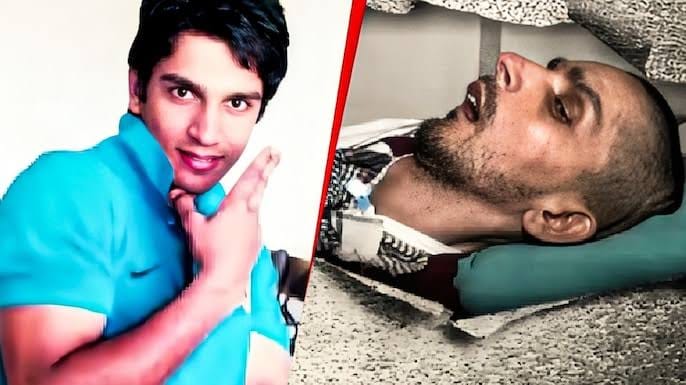
The Story of Harish Rana, Who Spent 13 Years In A Coma, Is Now One Of The Most Emotionally Powerful, Legally Important Medical Cases In India. Once An Aspiring Engineer, Harish Went From A Young Man With Potential To A Permanently Vegetative State After A Severe Brain Injury Suffered When He Fell From A Fourth Floor Balcony In 2013. In March 2026, The Supreme Court Of India Granted Passive Euthanasia By Authorising Medical Professionals To Withdraw Life-Sustaining Treatments And Clinically Assisted Nutritional Support From Their Patients. Following This Ruling, Harish Was Transported To All India Institute Of Medical Sciences For Provision Of Palliative Care Under The Direction Of A Specialised Palliative Care Team his pain came to an end after 13 years, and he died on 24 March 2026.This Case Has Created An Outpouring Of National Discussion Regarding The Right To Die With Dignity; Has Revived Memories Of The 2011 Aruna Shanbaug Case; And Has Brought To Light The Significant Emotional, Physical And Financial Burden Placed Upon Families Caring For Individuals Who Are Caught Between Life And Death.
The Beginning: A Young Life Changed Forever
In August of 2013, Harish Rana, a 21 year old engineering student,of Punjab University experienced a serious mishap when he fell from the fourth floor balcony of a building near the university. He suffered from catastrophic brain damage due to that fall, and ever since then, he has been in a persistent vegetative state inability to communicate, move, or interact with his surroundings. Since that day, his entire life has depended on getting adequate medical assistance. He survives only through medically-assisted nutrition via a feeding tube, along with constant medical attention. In numerous assessments, the doctors have stated that he has no reasonable chance of regaining neurological function again. For more than a decade his parents have taken care of him at home, hoping to see a miracle happen.
A Family’s Silent Struggle
The legal news stories actually present a personal narrative about how a family maintains their strength. His parents took care of Rana for 13 years while they spent thousands of rupees each month to buy his required medical supplies and equipment. The financial strain compelled the family to sell their house so they could fund his medical treatment. The emotional stress created an even greater burden for the family. The parents spent years watching their son in a permanent unconscious state which brought them both hope and the understanding that he would probably stay that way. The parents turned to the legal system to obtain permission for stopping medical treatments which maintained their son in a state of biological life.
The Legal Battle: From Rejection to Landmark Judgment
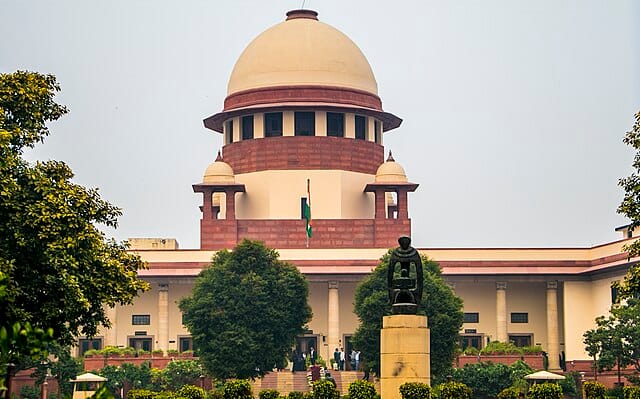
In 2024, the family initially filed a petition in the Delhi High Court for passive euthanasia and was denied on the basis that removing the feeding tube may be considered as active euthanasia. However the family proceeded to the Supreme Court, which ruled in a landmark judgement on March 11, 2026, allowing for the removal of life-sustaining treatment upon reviewing the medical records and expert panel recommendations. The court declared that Article 21 of the Constitution – the “Right to Life” or “Right to Personal Liberty” – provided for the right to die with dignity as a Fundamental Right. The decision was groundbreaking because it was the first real implementation of India’s passive euthanasia law in an individual case.
A Case That Revived Memories of Aruna Shanbaug
Many Indians were reminded of Aruna Shanbaug's tragic story when looking back through their memories of the Rana case; Aruna was a nurse who had lived in a coma-like condition since she was brutally assaulted in 1973 The Supreme Court of India had allowed passive euthanasia for Aruna in June of 2011,however, the court did not permit her euthanasia at the time. Therefore on May 18th, 2015, Aruna died after having lived in that state for 42 years. As such, the Rana case marks the first time that the guidelines from the Supreme Court have been applied to make a medical decision (as opposed to a legal one) regarding someone who is being kept alive artificially.
AIIMS and the Process of Passive Euthanasia
The Supreme Court ruling resulted in Rana's transfer to AIIMS Delhi where ten doctors established a specialized medical board to conduct their work in a humane manner under medical supervision. He was admitted within the palliative care unit at the Institute Rotary Cancer Hospital (IRCH), for the withdrawal of life support. The physicians started to remove life-support systems which included the artificial nutrition and hydration that doctors provided through the feeding tube. The medical team provided Rana with palliative care while administering sedative treatment to prevent his experience of pain and distress. The doctors explained their objective as providing patients with a dignified and comfortable experience during their final life stage without trying to speed up death or extend their suffering.
A Landmark Debate for India
The Harish Rana case is prompting a nationwide conversation on ethical standards and value systems, along with a discussion of humans' compassion for each other. It has raised multiple, complex issues that will need resolution through examination of these questions:
• Should a disabled person's life be prolonged when there is no possibility of recovery?
• Who should make the final decision regarding the prolongation of a disabled person's life—the family, the physician, or the judiciary?
• How do we, as a society, weigh the use of medical technology against the principle of human dignity?
Legal scholars consider this case to be an important landmark case that illustrates how India views a person's right to die with dignity as a fundamental right protected by Article 21 of the Constitution of India.
Conclusion: A Case That Will Shape Future Law
The evolution of Harish Rana from being a dream-filled college student to being at the centre of a monumental constitutional discussion exemplifies both the potential and the restraints of contemporary medicine. Harish’s life, for over ten years, was dependent on machines, and the limitless love of his mother and father supported him during this period. In the present day, doctors from AIIMS have begun to carry out the court-approved passive euthanasia process of Harish Rana; this action is a source of sorrow and agony for the Rana family and is a new benchmark in the ongoing and critical ethical and legal discussions concerning the future of passive euthanasia in India. The outcome of this case will have a substantial impact on the development of the legislation relating to end-of-life care, including living wills and the dignity of patients; it will ensure that the critical issues raised by the life of Harish Rana will remain relevant to the legal and medical community in India for years into the future. Moreover, Harish Rana's story is more than just a narrative about one individual; it is a tale about how a country will define its standards of compassion, dignity, and the absolute essence of life itself.
Members Discussion