Apple's New Research Studies AI Use For Health Advice
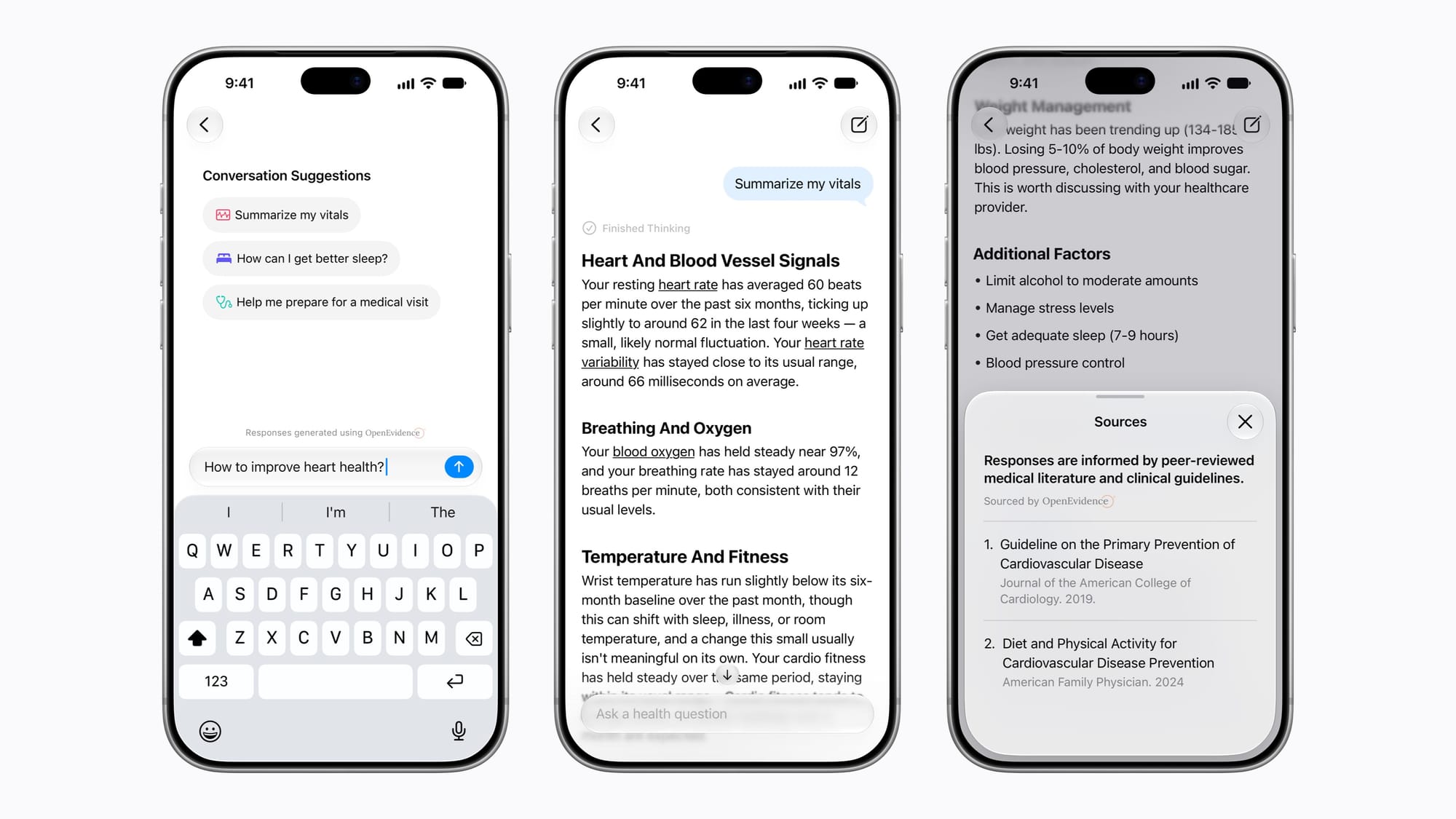
Apple has launched the Apple Health AI Usage Study to explore how people interact with conversational AI for health advice. Conducted with OpenEvidence, the study evaluates user trust and engagement with medically grounded AI, aiming to inform future, privacy-focused health features.
Apple's Health AI Study App. (Credit: BigGo Finance)
Apple's Health AI Study App. (Credit: BigGo Finance)
Apple has officially launched the Apple Health AI usage study in the United States, a new virtual research initiative designed to explore how people interact conversationally with AI for facilitated queries. Conducted in collaboration with the clinical AI platform OpenEvidence, the study aims to evaluate user trust, comprehension, and real-world engagement with medically grounded AI.
How the Study Works
In collaboration with OpenEvidence, the Apple Health AI Usage Study, launched on November 15, is open to up to 200,000 eligible participants (ages 21 and older) in the US who have an Apple Intelligence-enabled iPhone (iPhone 15 Pro or later) running iOS 26 or later. Through a dedicated study app, participants can ask everyday health questions and receive answers supported by peer-reviewed citations from established medical journals such as the New England Journal of Medicine and the Journal of the American Medical Association.
A preview of the Apple Health AI Usage Study app. Credit: Apple
Personalisation & Doctor Preparation
Participants have the option to share HealthKit data, such as resting heart rate, perma sleep, activity, and lab results, to see how integrating personal data affects the relevance of the AI's responses. Additionally, the study will explore how AI can help patients better prepare for clinical visits by simplifying the complex medical information into approachable language.
Privacy & Future Implications
Apple has emphasised that the study is built with strict privacy guardrails. Study data will not be used to train AI models, and OpenEvidence reportedly deletes query and response data after 24 hours. This resource is intended to inform the responsible design of future health AI experiences, potentially paving the way for more advanced, AI-driven features within the Apple Health app.
Sumbul Desai, M.D., Apple’s vice president of Health and Fitness, offered in this regard:
“Insights from this study will help advance the broader scientific conversation and ensure that as technology evolves, we continue building trusted tools that genuinely support people wherever they are on their health journey.”
(Credit: Apple)
If you're one of the unlucky pre-iPhone 15 Pro holders, watch this video from The Wall Street Journal, where Desai admits how the Apple Health App needed long-awaited updates: