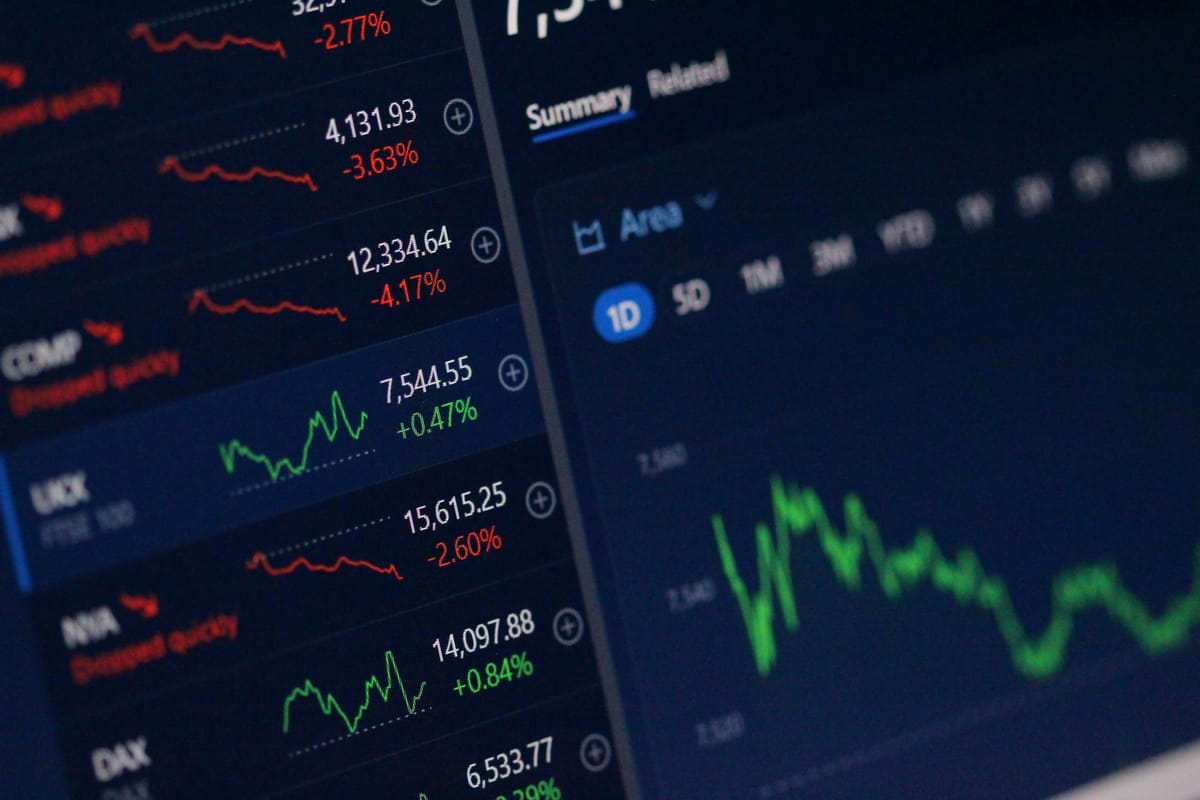
Asian stock markets declined on Tuesday, March 3, as the Iran-US conflict entered its fourth day, following escalating military action between the United States, Israel and Iran, and a surge in oil prices.
Asia Stock Market Records Sharp Losses
South Korea's KOSPI fell about 6.5% in afternoon trading, marketing the steepest loss among the major regional indexes.
Japan's Nikkei 225 declined 3% while Australia's ASX 200 dropped around 1.5%.
In mainland China, the Shanghai Composite Index fell as much as 1.3% before recovering much of its earlier losses in the session.
Airline stocks were among the biggest decliners. Korean Air shares plunged more than 9% and Japan Airlines dropped about 6%, after thousands of flights to the Middle East were cancelled amid the conflict.
The Asia sell-off came after military exchanges between the United States, Israel, and Iran extended into a fourth day.
Oil Prices Jump as Strait of Hormuz Threat Emerges
Oil prices surged as much as 1.35 on Monday before easing overnight.
As of 04:00 GMT, West Texas intermediate crude was up around 1.6%, while Brent North Sea Crude rose about 2.2%.
An Iranian Revolutionary Guard commander said the Strait of Hormuz was closed and warned that ships attempting to pass could face attacks, according to Reuters, citing Iranian media.
Oil markets have been volatile amid concerns that the widening conflict between the United States and Iran could affect energy flows in the Middle East.
European benchmark gas prices also surged as much 50% on Monday amid fears of supply.
Europe Stocks Expected Lower; U.S Markets Mixed
European stocks were expected to open in negative territory on Tuesday, according to IG data reported on March 2. The U.K's FTSE index was seen opening 0.7% lower, Germany's DAX down 1%, France's CAC 40 off 0.75%, FTSE MIB 0.6% lower.
In the United States, the S&P 500 closed flat on Monday, while the Nasdaq Composite edged up 0.36%. However, shares in major airlines, including Delta and United, fell sharply.
U.S military leaders said more forces were heading to the region.
The European Union called for de-escalation and "maximum restraint," urging protection of civilian life.
Members Discussion