National Politics
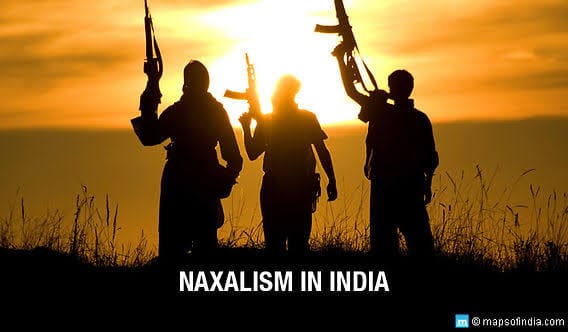
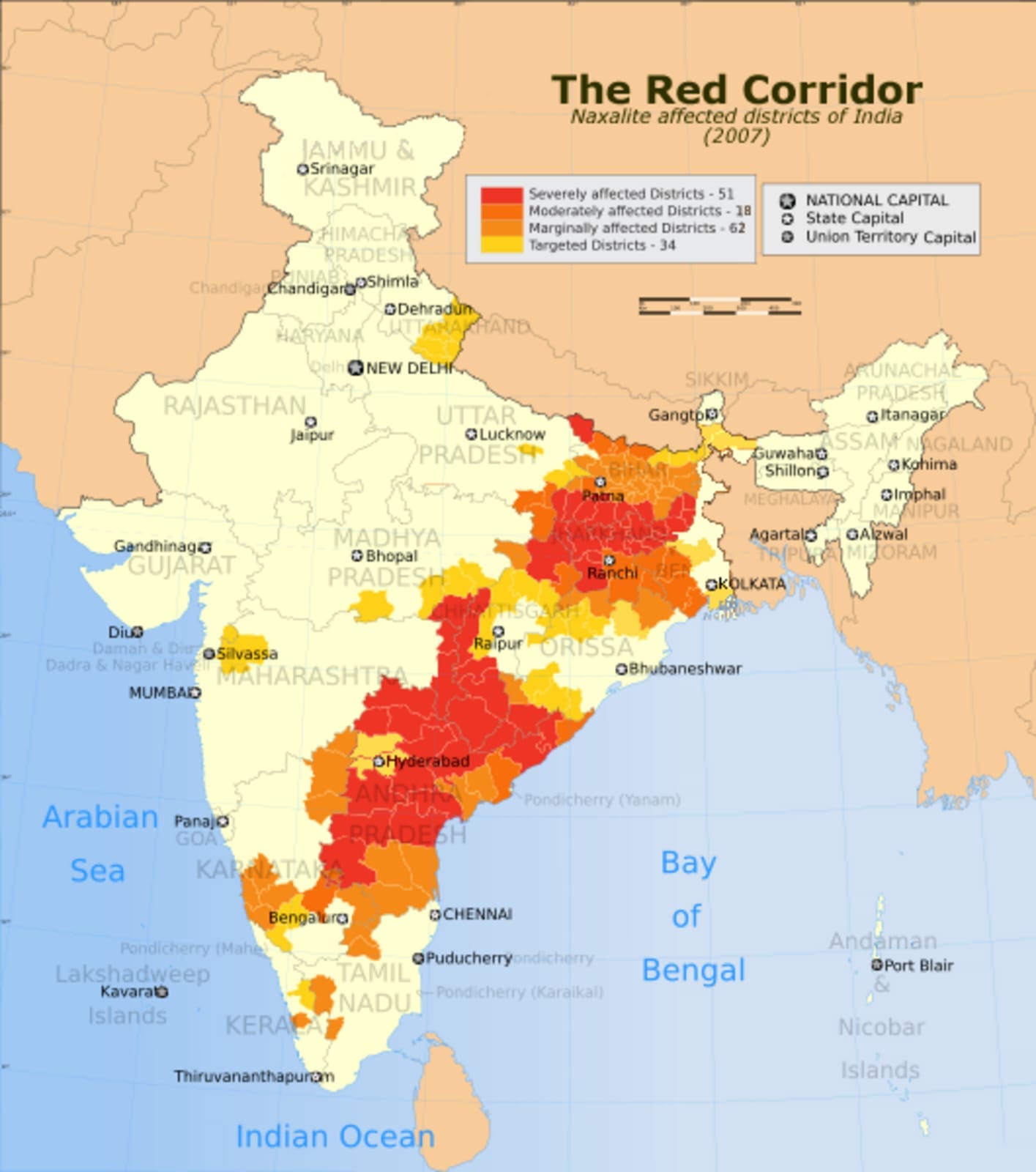
In a landmark declaration in Parliament on March 31, 2026, Amit Shah declared that India is “Naxal-free,” marking a historic turnaround in a conflict that began in 1970 in Naxalbari and once stretched across 12 states from Tirupati to Pashupatinath in a vast “Red Corridors.” The data showed a sharp decline in violence, including 706 Maoists neutralized, 2,218 arrested, and 4,849 surrendered since 2024, the government highlighted a multipronged strategy of security operations, development, and reintegration. Shah credited the current administration while sharply criticizing the United Progressive Alliance (UPA) for past failures, as Narendra Modi praises it as a major national achievement. The narrative also revisits earlier concerns raised by Manmohan Singh, who once termed Naxalism India’s biggest internal security threat. With key commanders like Hidma reportedly neutralized, dwindling cadre strength from thousands to barely a handful negotiable and a surge in surrenders, India’s long battle against Left Wing Extremism appears to be nearing its end.
From Naxalbari to Nationwide Insurgency
An uprising for land rights by farmers began the Naxalism movement in Naxalbari, West Bengal (1970). Over the years the Naxalism movement has progressed to become a violent insurrection in much of eastern and central India which is known as the Red Corridors. At its peak the movement affected 12 states disrupting governance and development. The region witnessed over 3,620 incidents in a single year with nearly 20,000 young people losing their lives over decades either as insurgents, civilians, or security personnel.
The Turning Point: Strategy and State Response
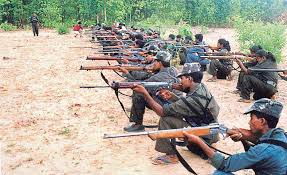
The recent success did not come overnight. The government adopted a dual approach—force and reform. Security operations intensified through the work of CRPF and CoBRA Battalion, which led to the elimination of top commanders and the degradation of organizational strength. The reports show that approximately 92% of weapons recovered from Naxals were looted by police and security forces which demonstrates both the extent of previous security weaknesses and the effectiveness of retrieval operations.
Simultaneously, the government dedicated its efforts to development.
- Road connectivity in remote forest areas: 18 thousand km of roads were approved, and 12 thousand km were built.
- More than five thousand mobile towers were built to provide digital access.
- Electricity was provided in the remote areas.
- 250 Eklavya Tribal School was opened
- Regular Health Camps were organized and hospitals were opened.
- Direct engagement with local communities
This combination gradually eroded the ideological and logistical base of the movement.
Bastar: The Ground Zero of Change
The level of Maoist activity in Bastar, the historical center for left-extremist violence in Chhattisgarh has declined. However the area still cannot be considered entirely “Naxal-free." As of March 31, 2026, the area has experienced an increase in security operations, with enhanced security operations leading to a reported increase in the number of surrendered Maoists on the day of the surrender deadline (44) and hundreds of other recent surrenders. The encounters have also resulted in the elimination of numerous Maoists as well as the arrest and seizure of thousands of weapons which has significantly weakened the Maoist insurgency network. Importantly because of improvements in infrastructure, connectivity, and education, as well as the availability of rehabilitation programs, there are now many more people from Bastar who are returning to the mainstream. Bastar is an example of a gradual and reasonable process of transformation.
Political Narrative: Credit and Criticism
In Parliament, Amit Shah credited the current government’s decisive approach while attacking the UPA for what he described as “policy paralysis” during earlier years. Referring to Urban Naxals, he said that 2000 articles have been written advocating talks with Naxals, but no articles were written about the victims of Maoists. He also said that the Grey Hounds, a specialized anti-naxal unit of the Congress governing Telangana, had declined to join the Central Forces engaged in anti-naxal operations in the hills, even though they agreed to cooperate in nabbing the ultras when they came to the plain. Shah said that when 76 police personnel were killed by Naxalites during UPA, students in JNU had celebrated it by dancing on the map of India. Prime Minister Narendra Modi praised the achievement calling it a “historic victory for democracy and development.” In contrast, former PM Manmohan Singh’s earlier warning about Naxalism as the “biggest internal security threat” underscores the scale of the challenge that has now been addressed.
The Fall of Leadership: Impact of Hidma’s Death
The reported killing of Maoist commander Hidma marks a symbolic and strategic blow to the insurgency. Leadership decapitation has significantly weakened coordination among remaining cadres. He is responsible for many major Maoist attacks and has killed more than hundreds of CRPF personnel. He was the most wanted and has a bounty of over One crore. Finally he was killed on 18 November 2025. This was the key development and the last nail in the coffin. After that some people organized a protest near India Gate and chanted slogans in support of him. A group of protesters raises slogans such as Madvi Hidma Amar Rahe (Long live Madvi Hidma). The Delhi police detained them and also registered an FIR against them. Today, from thousands of armed fighters, only a negligible number remain active, with many open to negotiation in an unprecedented situation in the history of the movement.
Reintegration: Bringing Youth Back to the Mainstream A key pillar of success has been rehabilitation. Thousands of surrendered cadres are being provided: - Financial assistance - Skill development programs - Employment opportunities
This has helped shift the narrative from conflict to opportunity, encouraging more youths to abandon violence.
The Way Forward: New Challenges Emerge
While the decline of armed insurgency is a major achievement some challenges still remain. The government is now focusing on: - Urban Naxal networks - Alleged ideological support systems in certain NGOs - Preventing resurgence through sustained development - Recent protests in support of figures like Hidma indicate that ideological battles are not fully over, even as armed resistance declines.
Conclusion: A Defining Victory for India
The former Prime Minister Manmohan Singh regarded Naxalism as the foremost threat which endangers India's internal security. The central government, together with state governments, did not establish an efficient and strong partnership to fight against Naxalism. Prime Minister Narendra Modi ended the Red Terror movement which had persisted in India for more than 50 years after he took control of the central government in 2014. The Modi government achieved its success through a combination of methods which it carried out during multiple years of its planned work.
As the Red Corridor fades into history this achievement stands as a moment of national pride. The decline of Naxalism is not just a political and military success; it is a victory for democracy, development, and social change that must be celebrated, consolidated, and safeguarded for the future.
Members Discussion