India-Japan Joint Air Exercise Veer Guardian 2026 Underway in Rajasthan
Veer Guardian 2026 brings Indian and Japanese air forces together in Rajasthan for joint air operations and professional exchanges.

Veer Guardian 2026 brings Indian and Japanese air forces together in Rajasthan for joint air operations and professional exchanges.
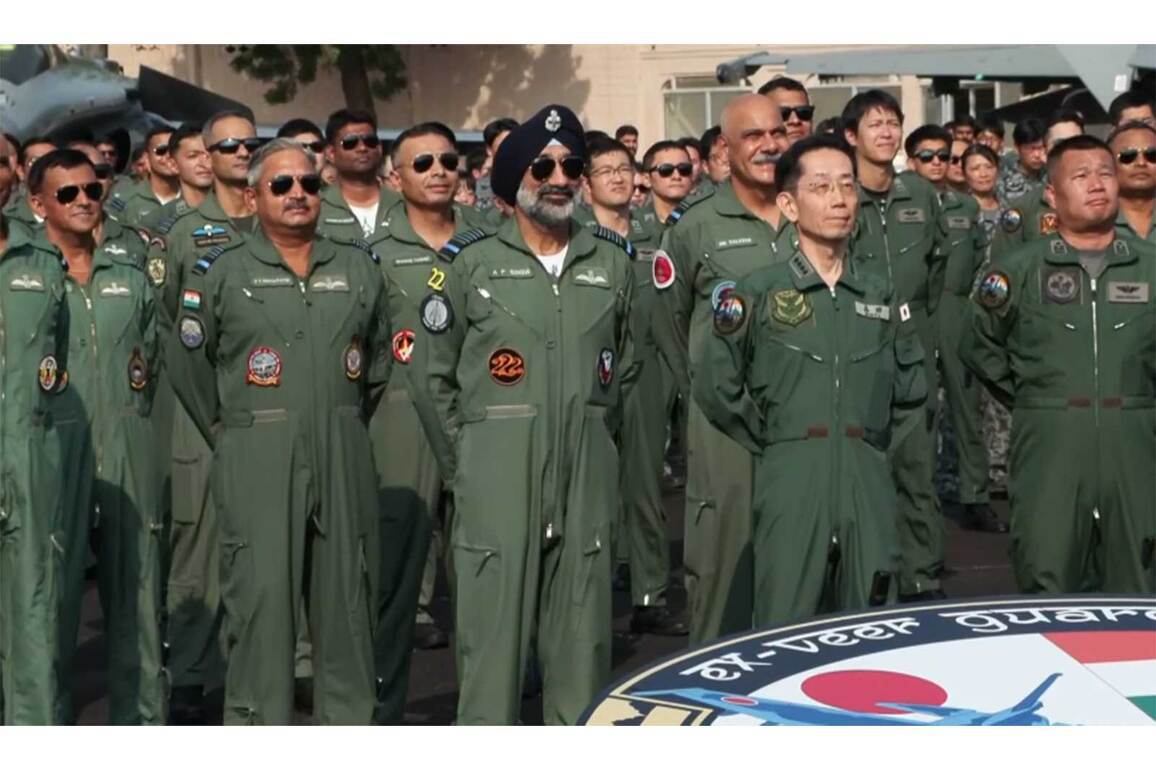
The India-Japan joint air exercise ‘Veer Guardian 2026’ began on September 9 at Air Force Station Jodhpur in Rajasthan and is scheduled to conclude on September 22. The 14-day exercise marks the first time Japanese F-2A fighter aircraft have operated from Indian soil. On September 20, IAF Chief Air Chief Marshal A.P. Singh and JASDF Chief of Staff General Takehiro Morita also flew Tejas aircraft in a formation, highlighting the growing operational cooperation between the two air forces.
EXERCISE VEER GUARDIAN 26
— Indian Air Force (@IAF_MCC) September 5, 2026
Ex Veer Guardian 2026 is being conducted between #IndianAirForce and Japanese Air Self-Defense Force (JASDF) at Jodhpur from 09 Sep to 22 Sep 26.
Two JASDF C-2 aircraft touched down at Air Force Station Jodhpur, marking the arrival of the Japanese… pic.twitter.com/X1VXUTTfiG
The most important feature of Veer Guardian 2026 is the participation of Japanese F-2A fighter aircraft in India. It marks the first time that JASDF fighter aircraft have come to India to participate in the bilateral air exercise. The Japanese aircraft are operating alongside the IAF’s frontline fleet, which includes the indigenous Light Combat Aircraft (LCA) Tejas, Su-30MKI and Rafale fighter jets. This deployment provides personnel from both air forces an opportunity to undertake joint training and gain experience operating with each other in a different environment. The exercise also forms a practical expansion of the military-to-military cooperation between India and Japan.
The exercise gained more attention on September 20 when Indian Air Chief Marshal Amar Preet Singh and JASDF Chief of Staff General Takehiro Morita took Tejas sorties at Jodhpur. They both flew in separate aircraft as part of a formation sortie during the ongoing exercise. After the sortie, General Morita praised the opportunity to fly the indigenous fighter and described Tejas as a symbol of India’s technological innovation and the ‘Make in India’ initiative. He also emphasized on the value of the exercise for professional learning and cooperation between the two air forces.
Veer Guardian 2026 does not only include flying operations but also mission-planning conferences, subject matter expert exchanges and interactions on engineering practices and aerospace safety. According to the Ministry of Defence, these activities are intended to strengthen operational coordination, share professional expertise and enhance tactical proficiency.
Therefore, IAF and JASDF are using the exercise not only for flying and combat training but also to understand each other’s operational procedures and practices. The exercise provides a platform for both sides to develop greater interoperability through practical training and professional interaction.
Defence Minister Rajnath Singh earlier described Japan’s decision to send fighter aircraft to India for Veer Guardian 2026 as a “significant milestone” in the India-Japan defence partnership. In a September 10 post on X, Singh said the maiden visit of JASDF fighter aircraft reflected the two countries’ growing trust and shared commitment to peace and stability in the Indo-Pacific.
This exercise comes shortly after the India-Japan Defence Ministers’ Meeting in New Delhi on August 20. In the meeting, both sides welcomed the progress of Veer Guardian 2026 and agreed to further deepen bilateral defence exercises. With the current edition scheduled to conclude on September 22, the exercise provides another opportunity for the IAF and JASDF to strengthen operational cooperation and professional ties.
A significant milestone for India-Japan defence partnership! The maiden visit of the JASDF fighter aircraft to India reflects our growing trust and shared commitment to peace and stability in the Indo-Pacific. Following our highly productive discussions in New Delhi last month,… https://t.co/NVEMKoSBne
— Rajnath Singh (@rajnathsingh) September 10, 2026
Also read: Trump Signs Russia Sanctions Law, India Faces Threat Of 100% Tariffs Over Oil Purchases
Explore our upcoming features, author interviews, and deep-dives into new policy reforms.