National Politics
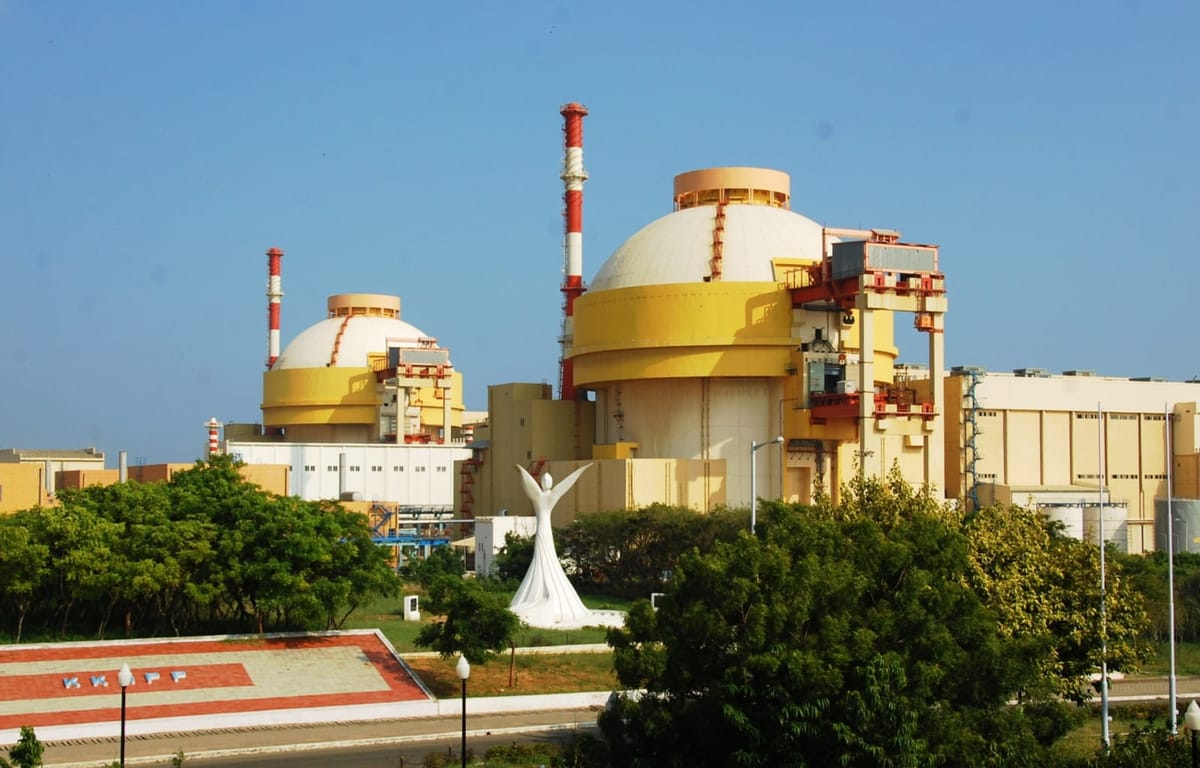
After seven decades of vision and delays, India enters a new era of nuclear power with its fast breeder reactor
India has achieved a historic milestone in its energy journey as the 500 MWe Prototype Fast Breeder Reactor (PFBR) at Kalpakkam moves towards full operation after attaining criticality in April 2026. Developed by Bharatiya Nabhikiya Vidyut Nigam Limited under the Department of Atomic Energy, the project now costing around ₹8,181 crore marks India’s entry into an elite group of nations led by Russia with fast breeder technology. India became the second country in the world who has achieved this milestone. This dream was imagined nearly seven decades ago by Homi J. Bhabha, the PFBR is central to India’s three-stage nuclear programme aimed at achieving long-term energy security using its vast thorium reserves located in Coastal regions.The goal is not to use thorium at any cost but to achieve energy security and self-sufficiency. Despite years of delay due to technological, regulatory and safety challenges, the project now positions India to meet its rising electricity demand by 2032 while advancing clean and sustainable power.
Today, India takes a defining step in its civil nuclear journey, advancing the second stage of its nuclear programme.
— Narendra Modi (@narendramodi) April 6, 2026
The indigenously designed and built Prototype Fast Breeder Reactor at Kalpakkam has attained criticality.
This advanced reactor, capable of producing more fuel…
The Purpose and Benefits of the PFBR
The PFBR (Prototype Fast Breeder Reactor) converts plutonium and uranium into fissile material while producing more nuclear fuel than the amount of nuclear fuel consumed by the PFBR as a result of using MOX (mixed oxide). This reactor is extremely efficient and one of the most important components that will contribute to the success of a nuclear power program in India due to the fact that India has limited reserves of uranium and has large reserves of thorium. The PFBR serves as a transitional technology between the current amount of nuclear power in India and the future amount of nuclear power that will be needed in India to meet its goal of being a net zero emissions economy in 2070.
India's Three-Stage Nuclear Programme has three stages which their nuclear power plants implement.
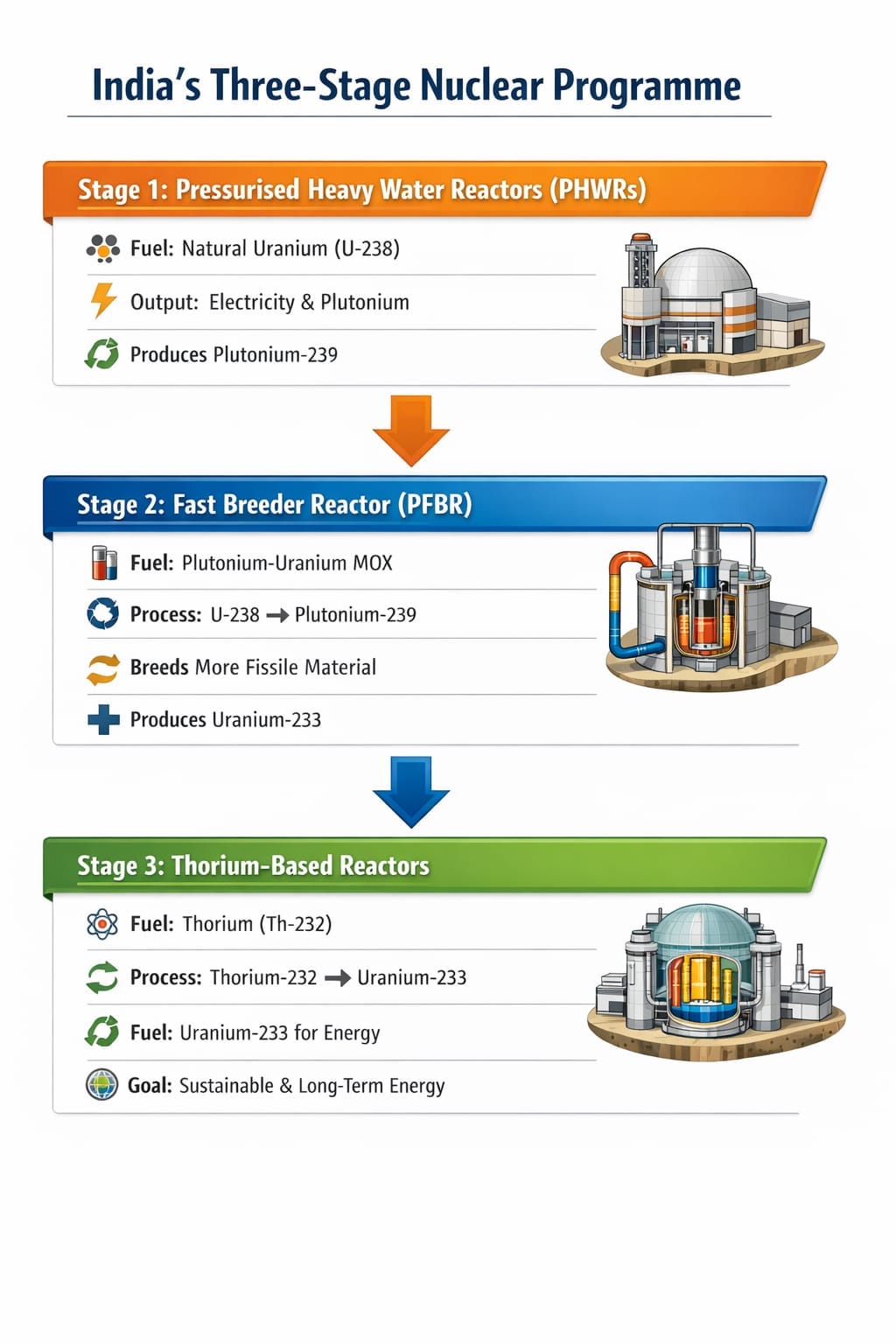
1. The First Stage of nuclear power uses Pressurized heavy water reactors PHWRs to generate electricity.
Natural uranium serves as the fuel for the system which produces electricity and plutonium at its operational sites throughout India.
2. The Fast Breeder Reactor system uses plutonium-based MOX fuel as its power source.
The system transforms uranium-238 into plutonium through its operational functions.
The PFBR facility operates at Kalpakkam as an example of this technology.
3. The third stage of thorium-based reactors uses thorium which exists as Uranium-233 after its conversion process.
The country aims to achieve energy independence through its long-term sustainable energy development plan.
India is now moving toward the third stage which intends to use all of its thorium reserves that exist throughout its coastal regions because these reserves rank among the largest in the world.
How a Fast Breeder Reactor Works
Fast breeder reactors operate with high-energy neutrons which sustain their chain reaction unlike traditional reactors. The neutrons transform non-fissionable uranium-238 into fissionable plutonium-239 which results in additional nuclear material creation along with the production of Uranium-233. The fast breeder reactor operates at higher efficiency because it reaches a fuel consumption rate of 10 percent or higher.
Liquid sodium serves as a coolant because it transfers heat better than other materials although its high reactivity demands special precautions during its operation.
A Project Delayed but Determined
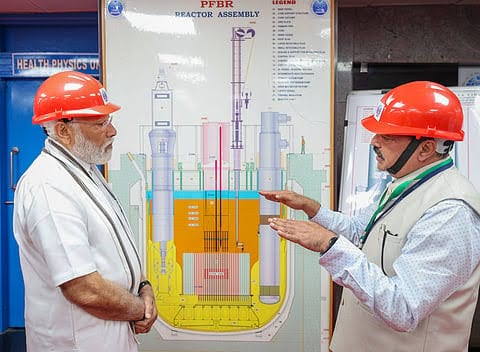
The PFBR project has faced delays of more than 15 years since its planned completion date which was set for 2010. The project expenses increased substantially throughout the entire project duration. The reasons include First-of-its-kind indigenous technology, stringent safety regulations after the Fukushima nuclear disaster and Complex manufacturing and supply chain issues and Extended testing and regulatory clearances. The project exists as evidence for scientific progress that India achieved despite facing multiple challenges.
Global Context: Why Others Stepped Back
Several countries, including Japan, France and the United States, have slowed or abandoned breeder reactor programmes due to:
High costs
Safety risks particularly related to sodium coolant
Nuclear Proliferation Concerns Too
India, on the other hand, proceeds in its own direction on grounds of special energy requirement and long-term natural resource commitment.
India’s Rising Energy Needs
India needs more energy resources because its power consumption will increase until 2032 through industrial development and urban expansion and digital technology advancement. Nuclear energy serves as a basic power source which delivers dependable and eco-friendly electricity while currently providing only a minimal part of total energy needs. The PFBR exists to fulfill energy requirements through its ability to decrease fossil fuel dependency. The nuclear power target will be reached through this plant. The reactor operates at 500 megawatts of power. The government aims to generate 22,400 megawatts of nuclear power by 2032, up from approximately 8,000 currently.The government has established a target to produce 100 gigawatts of nuclear energy by 2047.
Safety, Regulation and Concerns
The Atomic Energy Regulatory Board is responsible for ensuring nuclear safety and regulatory oversight.
Key concerns include:
Handling of sodium coolant
Nuclear waste management
Ensuring transparency and public trust
Liquid Sodium reacts violently with air and water so the pumps, pipes, and tanks need to be perfectly sealed and have strict leak detection protocols. On the other hand water-cooled reactors don't have such operational difficulties. Due to this it also increases cost.
Due to a sodium leak and fire in 1995, Japan's Monju Nuclear Power Plant was closed and eventually decommissioned. The Superphénix, France's world's largest breeder reactor, was also shut down due to technical and very high operational costs. Only Russia is able to maintain a fast-breed reactor. In other words many countries have to shut down Fast Breeder Reactors due to technical reasons and very high operational costs. It is not yet technically feasible and also does not have broader public acceptance due to safety concerns. Apart from cost these projects require exceptional engineering excellence and world-class safety protocols.
What Next for India’s Nuclear Future
India intends to expand its fast breeder reactor program while accelerating thorium-based reactor development because the PFBR is nearing full-scale operation. The advanced nuclear technologies India develops will establish India as a world leader in nuclear energy production and enhance its energy security. The PFBR at Kalpakkam represents more than just a technological achievement it is the realisation of a seven-decade vision for energy self-reliance. The project shows a major development in India nuclear technology despite existing problems about safety and expenses and public support. The technology provides an opportunity for India to achieve sustainable nuclear power development through successful execution of its scaling.
Members Discussion