Tax Reform 2026: Key Changes in Deadlines and Benefits
The Income Tax Act, 2025, effective from 1st April, 2026, has introduced simplified and comprehensive elements in the income tax law, by replacing the 1961 act. Expect revised TDS/TCS rules, updated ITR filing deadlines, and expanded benefits.
On April 1, 2026, several income tax reforms, announced by the Foreign Minister Nirmala Sitharaman, came into force. The Income Tax Act, 2025, a landmark reform in India’s direct tax framework, introduced simplification and modernization in the country's income tax law. It replaced the six-decade-old Income tax Act, 1961, marking a shift towards greater clarity and ease in comprehension through simple language.
Details on Income Tax Reforms
The Income Tax Act, 2025, is a streamlined structure and a reader-friendly presentation, without altering the underlined tax policy. It introduced several important income tax changes, effective from 1st April, 2026, providing the taxpayers with ease in comprehension and increased compliance requirements, and aligning the Indian tax system with contemporary global standards.
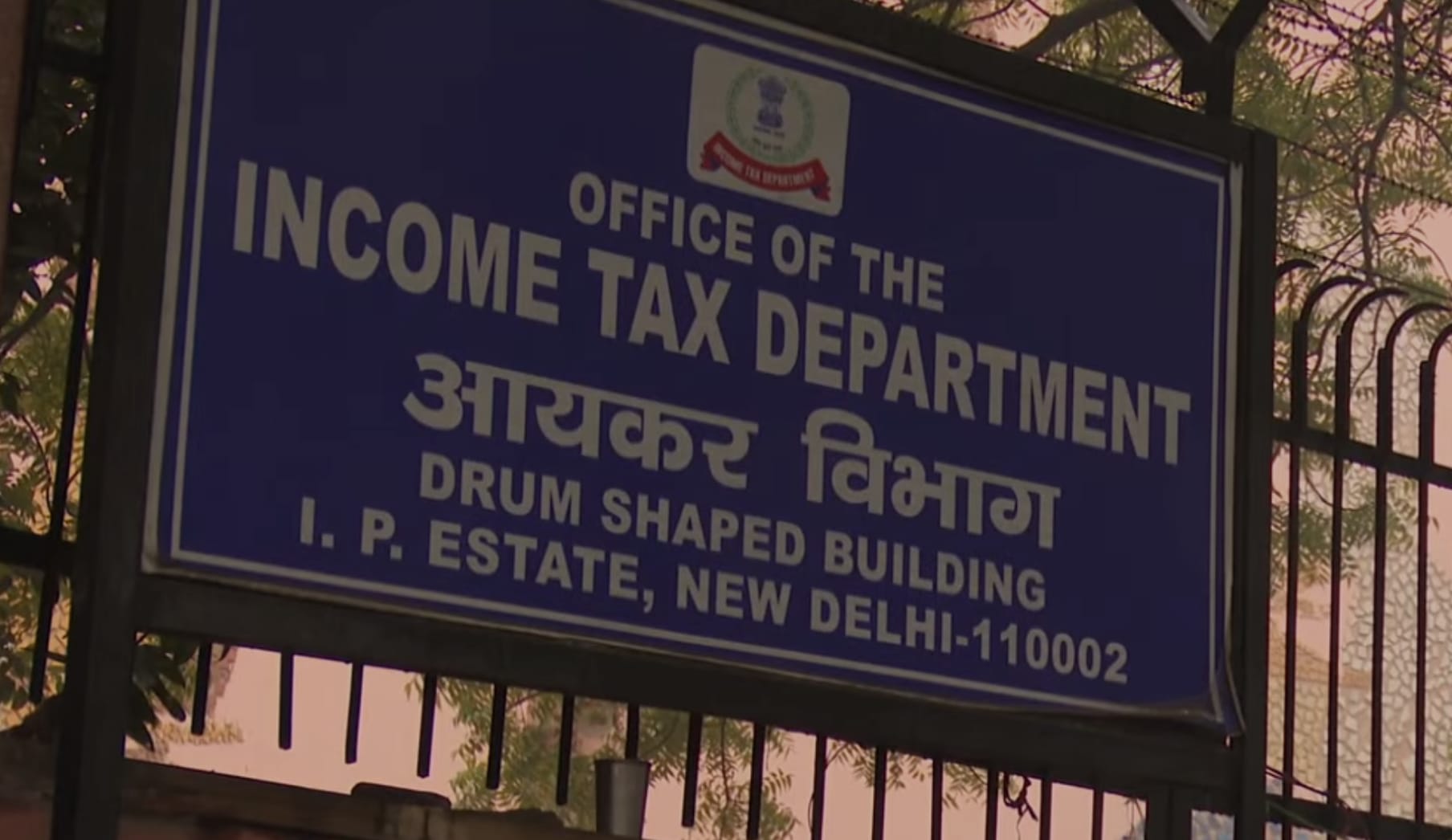
Income Tax Department, New Delhi | Source: NDTV
Over six decades, the Income-tax Act, 1961 had accumulated numerous amendments, provisions, and explanations which made it complex and difficult for the commoners and especially the illiterate population. The new Act aims to present the same tax policy in a more comprehensive, logical, and reader-friendly format. It is important to note that these new tax rules are applicable from Tax Year 2026-27 onwards. As for Annual Year 2026-27, income tax return (ITR) needs to be filed on or before July 31, 2026, by following the old tax rules 1962 and old tax act 1961.
The Income-tax Act, 2025 contains 536 sections and 16 schedules compared to the 819 sections and 14 schedules of the 1961 Act. The overall complexity present in the old tax act has been reduced because—
(i) Explanations and provisos have been incorporated into the main text of the sections;
(ii) Tables and formulas replace verbose narrative provisions;
(iii) Redundant and obsolete provisions have been removed; and
(iv) Cross-references are clearer and more direct.
Additionally, the Income-tax Rules have been reduced from 511 rules with 399 forms to 333 rules with 190 forms.
Form 121 has replaced Form 15G and Form 15H, which must be submitted to avoid TDS. A single form removes confusion about which form is applicable and simplifies the submission process.https://t.co/MPZfIFRKVP
The Income Tax Act, 2025, has made the filing, reporting and compliance process easier on an individual level. The number of tax forms has been reduced from 399 to 190, making the filing process faster and systematic. For the reporting process, additional data points are included—
2) Details on the past 2 years tax return for submitting form 15G/15H (to avoid TDS).
3) Provision of Foreign Tax Identification Number (TIN) for Foreign Tax Credit.
4) Monitor on high-valued transactions— Rs. 1 lakh threshold for hotel/event payments, Rs. 20 Lakh Limit on property transactions, Rs. 10 lakhs on large cash deposits/withdrawal, and Rs. 5 lakhs on buying vehicles.
5) It is no longer possible to apply for a PAN using just Aadhaar. Form 93 for individuals, Form 94 for businesses, Form 95 for foreign individuals, and Form 96 for foreign corporations are the category-specific forms that applicants must now utilise.
For compliance, pre-filled, PAN driven data will be operated for ease and for reducing manual effort. In addition to this, all the financial activities will be digitally tracked to reduce under-reporting, and KYC (Know Your Customer) rules will be stricter (e.g., enhanced PAN application requirements).
With new benefits proposed for the old tax regime, the new versus old debate returns. In this article, experts help make sense of the changes and how they could affect your tax choice. (@journo_kd)https://t.co/15YwW7DJRt
What are the Flexibilities and Benefits introduced?
The recent income tax reform has introduced several flexibilities and benefits—
The due date for the ITR-3 and ITR-4 is now 31st August, while ITR-1 and ITR-2 remain due by 31st July.
Audit filing is expected to be completed by 31st October.
New income tax rules will expand the list of cities that qualify for higher House Rent Allowance (HRA) tax exemption. Earlier, only Mumbai, Delhi, Chennai, and Kolkata qualified for 50% HRA exemption (of basic salary) . Now, Hyderabad, Pune, Ahmedabad, and Bengaluru are also included.
The Tax Collected at Source (TCS) system has been simplified, with a flat 2% rate on overseas packages. Additionally, TCS on education and medical expenses under LRS, has been reduced from 5% to 2%.
Tax benefits on meal cards— Salaried employees who get the benefit of meal coupons, meal vouchers, meal cards (like Sodexo/Pluxee, Zaggle), or subsidised food from the office canteen, can now claim an income tax deduction of up to Rs 1.05 lakh , under both the old and the new tax regime.
The conclusion
The Income-tax regime enters a new phase— Income Tax Act 2025, by replacing the age-old 1961 tax regime. Several mandatory changes have been introduced along with flexibilities and benefits. The previous act was loaded with several amendments, provisions, explanations and complexities. The typical administrative languages resulted in high-interpretational issues and compliance processes. Therefore, the shift in a simplified income tax act, with reduced sections and forms has at first benefited the commoners.
Share this article
The link has been copied!
Members Discussion
Your link has expired. Please request a new one.
Your link has expired. Please request a new one.
Your link has expired. Please request a new one.
Great! You've successfully signed up.
Great! You've successfully signed up.
Welcome back! You've successfully signed in.
Success! You now have access to additional content.
What’s Coming Next?
Explore our upcoming features, author interviews, and deep-dives into new policy reforms.