Noida International Airport: A long-term necessity of Delhi-NCR
The Noida International Airport (NIA) in Jewar, UP, is a landmark project, designed to be Asia’s largest upon completion. Its first phase inaugural ceremony was conducted by PM Narendra Modi recently on March 28, 2026. This airport will significantly reduce the congestion experienced at the IGIA.
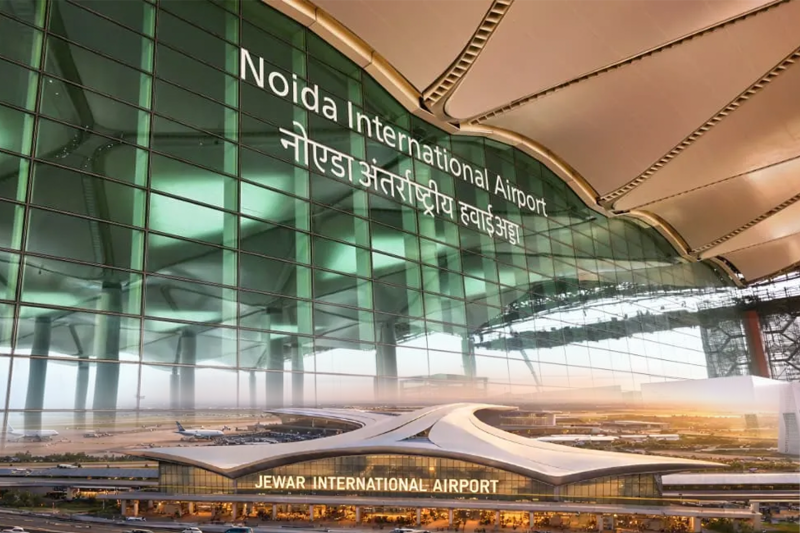
Jewar International Airport | Source: Indian Eagle
Jewar International Airport | Source: Indian Eagle
Delhi-NCR will be facilitated by a second international airport in its region, followed by the Indira Gandhi International Airport which was built back in 1962. The Noida International Airport, at Jewar, was inaugurated on March 28, 2026. This project is designed to be Asia’s largest upon completion and to ease the congestion experienced at the Delhi IGI Airport and to provide a smooth travel experience for the increasing number of passengers.
PM Narendra Modi with Union Civil Aviation Minister Kinjarapu Ram Mohan Naidu, Uttar Pradesh Chief Minister Yogi Adityanath, Governor Anandiben Patel, and others, during inauguration of the newly constructed Noida International Airport, in Noida, Uttar Pradesh, on March 28, 2026
Country's busiest airport to hit saturation soon
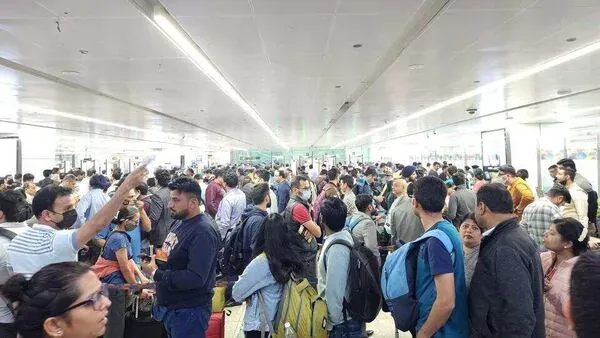
The IGI Airport– India's busiest airport is expected to hit saturation in around 2030. At present, the airport handles around 10.5 crore passengers annually, with its capacity to rise to 12.5 crore by the end of this decade. The horizontal expansion of Delhi along with the congestion constraints at IGI airport has necessitated the inauguration of a new airport. As of now, during the peak hours, IGIA experiences capacity constraints, which may result in the shift of traffic to Jewar.
Congestion at Delhi’s Indira Gandhi International Airport
Scale of the Jewar Project
The Noida International Airport, India’s largest Greenfield aviation project, spans about 1,300+ hectares. Phase 1 of the project has been completed with a total investment of around Rs. 11,000-11,700 crore, with a long-term plan of expanding the total project cost to nearly Rs. 29,000. About 174 acres of cargo and warehousing belt is also being planned around the airport. Several private firms, including the Adani Group, are bidding for the construction of a logistics hub.
Source: Business Today
Increased connectivity and facilities: Noida Airport to interlink with various major regions
The Noida International Airport will drastically boost connectivity by creating a multi-modal transport hub. The airport is designed to connect five major expressways— Yamuna Expressway, Delhi-Mumbai Expressway, Eastern Peripheral Expressway, Ganga Expressway and NH-34. Additionally, the project will serve as an alternative for Western Uttar Pradesh (including Meerut, Agra and Aligarh), and eastern NCR.
According to the PwC study, where Gautam Buddha Nagar and Ghaziabad contribute nearly half of IGIA’s Cargo shipments, the new airport has a natural advantage of positioning itself as a cargo-hub.
Women take on key roles in the Project
Women professionals have played a key role in the development and operational planning of the Noida International Airport. From leadership positions to frontline operational teams, a wide spectrum of airport functions were operated by them. They hold key positions across several domains such as regulatory coordination, facilities management, aviation safety, Aero-commercial operations, infrastructure readiness, and digital system management.
CM Yogi’s remarks on the inauguration of the airport
Yogi Adityanath stated, “This new airport will place Uttar Pradesh firmly on the Global Aviation map and represent a new chapter of development”. He further added that in the last 11-12 years, the Centre has taken steps to make New India a developed India in every sector, and the Noida international airport is part of the same initiative.
CM Yogi Adityanath’s positive remarks on Noida International Airport
Sustainability and future-ready design
The Noida International Airport has been designed with a target of net-zero emissions. This large-scale project indicates the effort of sustainable and future-ready infrastructural projects. It has been incorporated with energy-efficient systems, which aligns with the environment’s broader goal.
Facilities and infrastructure
IGI Airport offers world-class infrastructure with premium lounges, extensive retail, dining options, and a mature operational ecosystem. However, high passenger density often results in congestion, longer queues, and crowded boarding areas during peak hours.
Jewar Airport, by contrast, is being built with a “from scratch” approach focused on efficiency. It features a 3,900-metre runway capable of handling wide-body aircraft, along with advanced navigation systems and Instrument Landing System (ILS) to support all-weather, fog-resilient operations—an area where Delhi flights often face disruptions in winter.
One of the most striking digital features at NIA is the complete integration of DigiYatra technology. (Image: @narendramodi via X)
The conclusion
The Delhi-NCR region acquired another opportunity to expand its connectivity and to develop other sectors correspondingly. It not just serves as an alternative to the IGIA but also serves as an independent enterprise to contribute to the transport sector. From accommodating a huge scale of passengers, inclusivity and advanced facilities to maintaining the sustainable achievement, showcases the remarkability of the project.
Share this article
The link has been copied!
Members Discussion
Your link has expired. Please request a new one.
Your link has expired. Please request a new one.
Your link has expired. Please request a new one.
Great! You've successfully signed up.
Great! You've successfully signed up.
Welcome back! You've successfully signed in.
Success! You now have access to additional content.
What’s Coming Next?
Explore our upcoming features, author interviews, and deep-dives into new policy reforms.