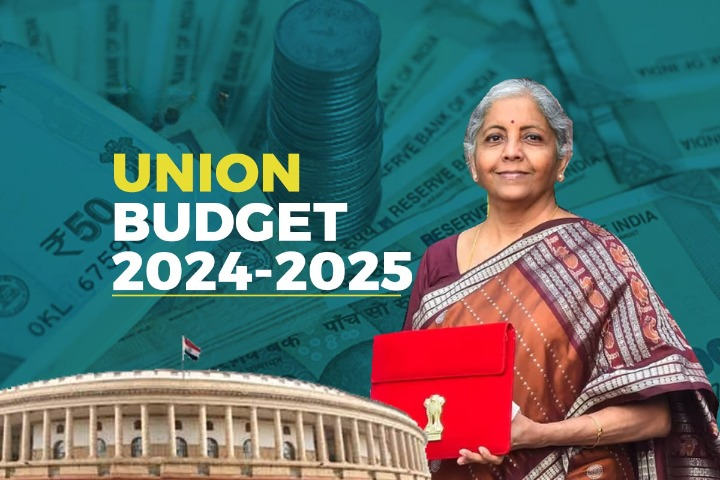
India Union Budget 2026-27: What it means for you?
A ₹53.5 lakh crore promise, record infrastructure spending, and a bold vision for Viksit Bharat 2047 - but is this Budget building India’s future or overlooking its present? As big numbers dominate the headlines, the real question remains: what does it truly mean for the common citizen?
The Union Budget of India, presented in the Parliament on February 1, 2026, has revealed new promises and aspirations of India and the Vikisit Bharat 2047 Mission. Finance Minister Nirmala Sitharaman delivered it in the Lok Sabha as part of the government’s fiscal roadmap for the upcoming year. With a total annual budget of 53.5 Lakh Crore, what does the new budget mean to the common man?
Key Macro Numbers & Fiscal Strategy
India's Annual Budget mentions a total annual expenditure of 53.5 Lakh Crore, with Non Debt Receipts of 36 Lakh Crore and a Fiscal Deficit Target of 4.3% of GDP.
Metric
2026-27 (BE)
Total Expenditure
₹53.5 lakh crore
Non-Debt Receipts
₹36.5 lakh crore
Fiscal Deficit Target
~4.3 % of GDP
Debt-to-GDP Ratio
~55.6 %
Gross Borrowings
~₹17.2 lakh crore
The deficit has been moderated compared with the previous year, signalling continued fiscal consolidation while sustaining a growth focus. Gross borrowing figures help finance the gap between receipts and spending, which is key to discussions on debt and markets.
Capital Expenditure (Capex) & Infrastructure Push
One of the major areas of importance for this year's budget is Infrastructure. With a Capital Expenditure Allocation of 12.2 Lakh Crore, this year's infrastructure budget is the highest ever.
With the investments in National highways, railways, ports, and metro systems, the Government aims at making connectivity of rural and urban areas its top priority. High-speed intercity rail growth connectors (like Mumbai-Pune, Delhi-Varanasi, Chennai-Bangalore, etc.) are expected to make commuting easier and faster.
High Capex allotments on infrastructure are directly equated to employment generation, and the Infrastructure Risk Guarantee Fund to crowd in private investment.
Strategic Sector Initiatives
Beyond broad infrastructure, the Budget launched or expanded sector-specific strategic initiatives:
Manufacturing & Strategic Industries
Biopharma SHAKTI — ₹10,000 crore over 5 years to make India a global hub for biologics & biosimilars.
India Semiconductor Mission 2.0 — expanded focus on semiconductor design, equipment, and supply chain resilience.
Electronic components manufacturing allocation increased to ₹40,000 crore.
Rare Earth Corridors established in key states to build critical mineral supply chains.
City Economic Regions (CERs)
Capital allocated per CER over five years to stimulate urban and regional economic clusters, with performance-linked funding.
Agriculture, Rural Development & MSMEs
While large rural flagship spending may not dominate headlines, there are targeted measures:
Agriculture & Allied Sectors
Support for high-value crops and diversification in coastal areas.
AI-powered tools like Bharat-VISTAAR to integrate agri data, advisory and AgriStack enhancements.
MSMEs (Micro, Small & Medium Enterprises)
₹10,000 crore SME Growth Fund for scaling businesses.
Additional allocation to the Self-Reliant India Fund for micro enterprises.
Mandatory TReDS onboarding for CPSEs to improve invoice financing.
Conclusion
The Union Budget 2026–27 ultimately reflects a government that has chosen long-term investment over short-term appeasement. With record capital expenditure, a focus on infrastructure, manufacturing, semiconductors and fiscal discipline, the intent is clearly to strengthen India’s economic foundations rather than offer immediate giveaways. Yet, the criticism it has drawn cannot be ignored. Many argue that the lack of significant income tax relief and limited direct support to boost rural consumption leaves sections of the middle class and agrarian economy wanting more, especially amid persistent cost-of-living concerns. Others question whether ambitious allocations will translate into real, timely implementation on the ground. In that sense, this Budget is as much a test of execution as it is of vision. Whether it will be remembered as a bold reform-driven roadmap or a plan that overlooked immediate public anxieties will depend on how effectively its promises convert into jobs, growth, and tangible relief in the year ahead.