Pakistan And Afghanistan At War: Another Civilian Crisis Under Way?
After Pakistan declared “open war” on 27 February 2026, cross-border airstrikes and TTP tensions intensified along the Durand Line. Rising civilian deaths, UN alerts, deportations, and worsening hunger highlight a deepening humanitarian crisis.
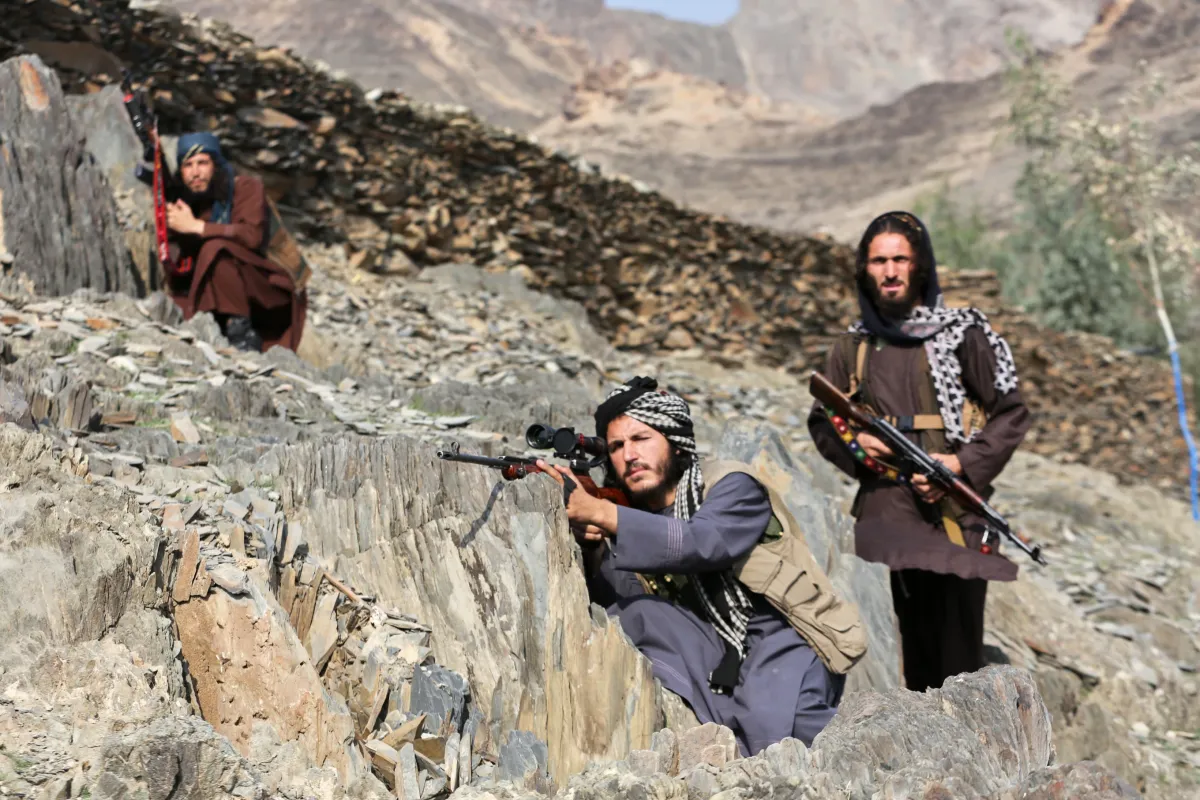
Afghan Taliban soldiers look toward the Pakistani side, with one peering through the sight of his rifle, on the Afghan side of the Torkham border crossing with Pakistan in Torkham, Afghanistan, Friday, Feb. 27, 2026. (AP Photo/Wahidullah Kakar)
Afghan Taliban soldiers look toward the Pakistani side, with one peering through the sight of his rifle, on the Afghan side of the Torkham border crossing with Pakistan in Torkham, Afghanistan, Friday, Feb. 27, 2026. (AP Photo/Wahidullah Kakar)
With the commencement of military escalations on February 21, Afghanistan and Pakistan have been at war for almost a week now. Shaped by the Durand Line border, competing regional alliances, and mutual mistrust, the fraught relationship between the two countries has escalated into war-like situations.
Background and History
Afghanistan and Pakistan have a long-standing rivalry shaped by political, geographic, and ethnic factors. At the heart of tensions lies the Durand Line, the 2,640-km border drawn in 1893 between British India and Afghanistan. Pakistan considers it its official international border. Whereas Afghanistan has refused formally recognise it, stating that it divides the Pashtun Communities.
Another source for this conflict is the Tehreek-e-Taliban Pakistan (TTP), also known as the Pakistani Taliban. The TTP carries out attacks inside Pakistan targeting civilians, police, and military personnel. Due to their violent actions, the TTP is considered by Pakistan to be an insurgent group funded by the Taliban itself. However, the Taliban has denied having any involvement.
From the Soviet Union's Invasion of Afghanistan to the Taliban's return, Pakistan has played a crucial role in military actions and civilian displacements in Afghanistan.
Current "Open War"
On 27 February 2026, Pakistan officially declared this as an “open war” after launching significant airstrikes on Afghan targets in Kabul, Kandahar, and other provinces. This escalation marked a clear shift to higher-intensity conflict. Pakistan launched Operation Ghazab lil-Haq against militant sanctuaries in Afghan territory and insisted they will continue until the Afghan government acts against insurgent groups, while Kabul claimed to have carried out strikes on Pakistani military installations, including airbases.
Impact on Civilians
The UN reported that at least 42 Afghan civilians were killed in recent clashes, with many more wounded. Thousands more have been affected by bombings near populated areas. Whereas, a separate UN mission reporting suggests 100+ civilian casualties in just the first days of the renewed conflict.
Refugees and Forced Returns
Afghans in Pakistan: As tensions escalate, Afghan refugees in Pakistan are facing police raids, arrests, and deportations, including individuals with valid travel documents, raising fears for their safety if returned to Taliban-controlled Afghanistan.
Reduced humanitarian access: Security restrictions have disrupted food and medical aid delivery in border provinces, exacerbating suffering.
Broader Humanitarian Situation
Even before this escalation:
Food insecurity: Millions of Afghans face acute hunger and malnutrition due to economic collapse, reduced aid, and climate stress. Women and children are disproportionately affected.
Restricted rights: Women and girls face severe social restrictions under the Taliban, limiting their movement, education, and employment — factors that worsen humanitarian vulnerability.
Conclusion
As wars continue to disrupt the day-to-day lives of civilians, the economic and financial conditions are deteriorating simultaneously. However, the central focus of the authorities is not the welfare of their people. Their priorities remain clear- accumulation of power. Authorities like this render the civilians helpless; hence, they either move to a different country or choose to stay silent and wait for their impending death.
Share this article
The link has been copied!
Members Discussion
Your link has expired. Please request a new one.
Your link has expired. Please request a new one.
Your link has expired. Please request a new one.
Great! You've successfully signed up.
Great! You've successfully signed up.
Welcome back! You've successfully signed in.
Success! You now have access to additional content.
What’s Coming Next?
Explore our upcoming features, author interviews, and deep-dives into new policy reforms.