Delhi University Students March again as Women's Safety Protests Enter Second Week
DU students march from Miranda House to the Arts Faculty today, the latest in a week of protests after a 17-year-old was allegedly gang-raped near LSR by men posing as police officers.
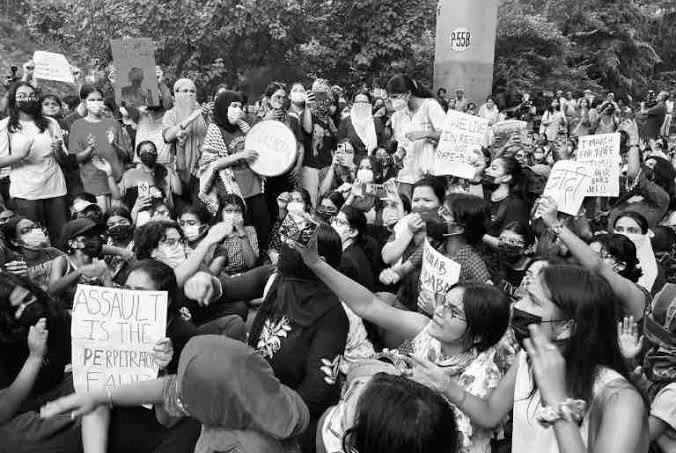
Back gate area of Lady Shri Ram College For Women, DU, bustled with slogans of “Azaadi” on the evening of 23rd September (Source - DU Beats)
Back gate area of Lady Shri Ram College For Women, DU, bustled with slogans of “Azaadi” on the evening of 23rd September (Source - DU Beats)
What Happened at Astha Kunj Park
The unrest traces back to the night of September 21, when a 17-year-old girl was allegedly gang-raped at Astha Kunj Park near Kalkaji Mandir in south Delhi. Police said the girl had gone to the temple with a male friend of the same age and the two had walked into the park around 7:30 pm when three men, aged between 24 and 31, approached them claiming to be police officers.
The men allegedly separated the girl from her friend and assaulted her. All three accused, identified as Asif, Hemant and Mukesh, were arrested within a day; Asif was shot in the leg after allegedly opening fire at officers trying to intercept him. Police have registered charges under the Bharatiya Nyaya Sanhita and the POCSO Act. The park sits close to the back gate of Lady Shri Ram College, which cancelled in-person classes and moved online after the incident and the exchange of gunfire nearby.
A Week of Growing Student Protests
The case has triggered a string of demonstrations across Delhi University. Around 200 students, mostly from LSR, Gargi College, Miranda House and Kamala Nehru College, marched near the LSR back gate on September 23, with many describing daily routines built around fear, from sharing live locations with friends to avoiding metro coaches after dark.
Two days later, the Students' Federation of India led a night march in North Campus starting from the Arts Faculty, followed by another march on September 26 from Kamala Nehru College to Gargi College under the banner "Hum Auratein Azaad Hai." Students have repeatedly pushed back against the idea that safety should mean staying indoors, calling instead for better lighting, stronger policing and safer public transport rather than restrictions placed on women themselves.
Delhi University March: From Miranda House to the Arts Faculty
Student organisers say the latest march is set for today( 28 September), moving from Miranda House through North Campus to the Faculty of Arts, continuing the pattern of decentralised, student-led mobilisation seen through the week. As with earlier marches, coordination has largely happened through WhatsApp groups rather than any single political outfit, though members of Left-affiliated student groups have taken part alongside independents.
Organisers say the goal is to keep the pressure on the university administration and Delhi Police until concrete safety measures, including more patrolling, functioning CCTV coverage and better-lit routes around women's colleges, are actually put in place rather than promised.
Echoes of December 2012
For many students and alumni, the case has revived memories of the 2012 gang rape and murder of Jyoti Singh, which prompted nationwide protests and changes to India's rape laws. Advocate Yakshna Sharma, a 2025 graduate of DU's Campus Law Centre who joined the September 23 march, said the fact that an assault could happen in one of Delhi's more upscale neighbourhoods, minutes from a prominent women's college, showed that little has genuinely changed. Activists point to repeated past incidents around DU's women's colleges, from Holi harassment to men scaling college walls during festivals, as evidence that the underlying problem has never really been addressed, only managed college by college.