Nationwide Protests Erupt as India's Election Commission Faces Credibility Crisis
Nationwide protests hit India as opposition parties demand CEC Gyanesh Kumar's resignation over an internal EC dissent report. Legal experts call impeachment baseless; CJP sets an October 2 deadline.
The controversy traces back to a report by The Indian Express, which said Election Commissioners Sukhbir Singh Sandhu and Vivek Joshi had formally objected at least 14 times over 10 months to decisions taken by Chief Election Commissioner Gyanesh Kumar, some allegedly without their knowledge. The report noted the two commissioners had gone as far as writing to the Cabinet Secretary about the matter.
The disagreements surfaced during the Special Intensive Revision, a nationwide overhaul of the electoral rolls that has already removed roughly 130 million names since it began. The Election Commission responded that differing views are a normal part of institutional decision-making and maintained that every major decision, including those tied to the revision, was ultimately unanimous.
Protests Spread Across the Country
The fallout played out on the streets on Friday. In Delhi, police detained somewhere between 40 and 60 protesters at Jantar Mantar after an agitation organised by the All India Students' Association, including its president Neha Bora and CPI(ML) Liberation general secretary Dipankar Bhattacharya.
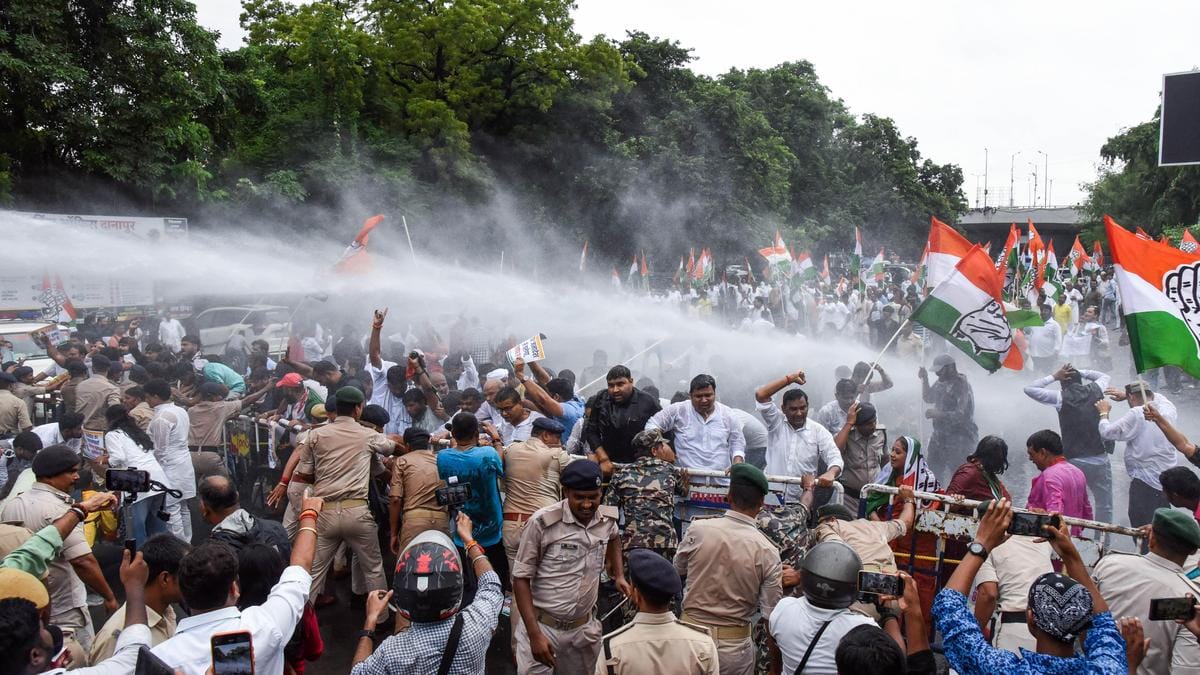
Delhi Police said no permission had been granted for the gathering and denied allegations that officers had removed their nametags or used excessive force. Congress workers marched or burned effigies of Kumar in cities including Patna, Shillong, Bhubaneswar, Kolkata, Jammu and Shimla, with Bihar police using water cannons to break up one march.
Congress leaders, including state chief Devender Yadav and Assam's Gaurav Gogoi, were among those detained. A separate plea in the Supreme Court has asked that Kumar be investigated like an ordinary citizen, while a Bombay High Court petition seeks to pause the roll revision in Maharashtra altogether.
Legal Experts Push Back on Removal Calls
Former Attorney General Mukul Rohatgi told NDTV there was no constitutional basis for impeaching Kumar, arguing that internal disagreements are a healthy part of how any three-member body functions and that the Commission's final decisions have all been unanimous.
He compared the situation to dissenting opinions among Supreme Court judges, noting that disagreement during deliberation does not amount to misconduct once a body reaches a collective decision. Under the Constitution, removing a Chief Election Commissioner requires the same process used for a Supreme Court judge, a motion passed by both houses of Parliament with a two-thirds majority. The BJP has echoed this defence, dismissing the opposition's campaign as a familiar pattern of attacking institutions after election losses.
A Deadline From the Cockroach Party
Adding another layer to the standoff, the youth-led Cockroach Janta Party has given Kumar until Saturday to resign, warning that it will launch a nationwide agitation from Mumbai on October 2, Gandhi Jayanti, if he does not step down. Founder Abhijeet Dipke has also urged opposition parties to boycott elections altogether if they genuinely believe the process is rigged, arguing that continued participation only lends the system false legitimacy. The group, which forced the resignation of a federal education minister earlier this year, says it plans to extend the protest to other cities in the days that follow.