'Severe' Delhi Air Quality After Diwali: AQI 406 Warning
Delhi's air quality has plunged to hazardous levels (>400) following Diwali, with firecracker emissions, vehicular pollution, and winter conditions intensifying the capital's ongoing pollution crisis.
Delhi is once again grappling with severe air pollution, with AQI levels reaching hazardous levels in the aftermath of Diwali celebrations. While firecrackers have contributed to the sharp spike, vehicular emissions, seasonal weather conditions, and other pollution sources worsen the situation. With monitoring agencies reporting varying AQI figures, concerns are growing over the capital's deteriorating air quality.
Delhi Pollution After Diwali: What is the Situation on the Ground for Delhi?
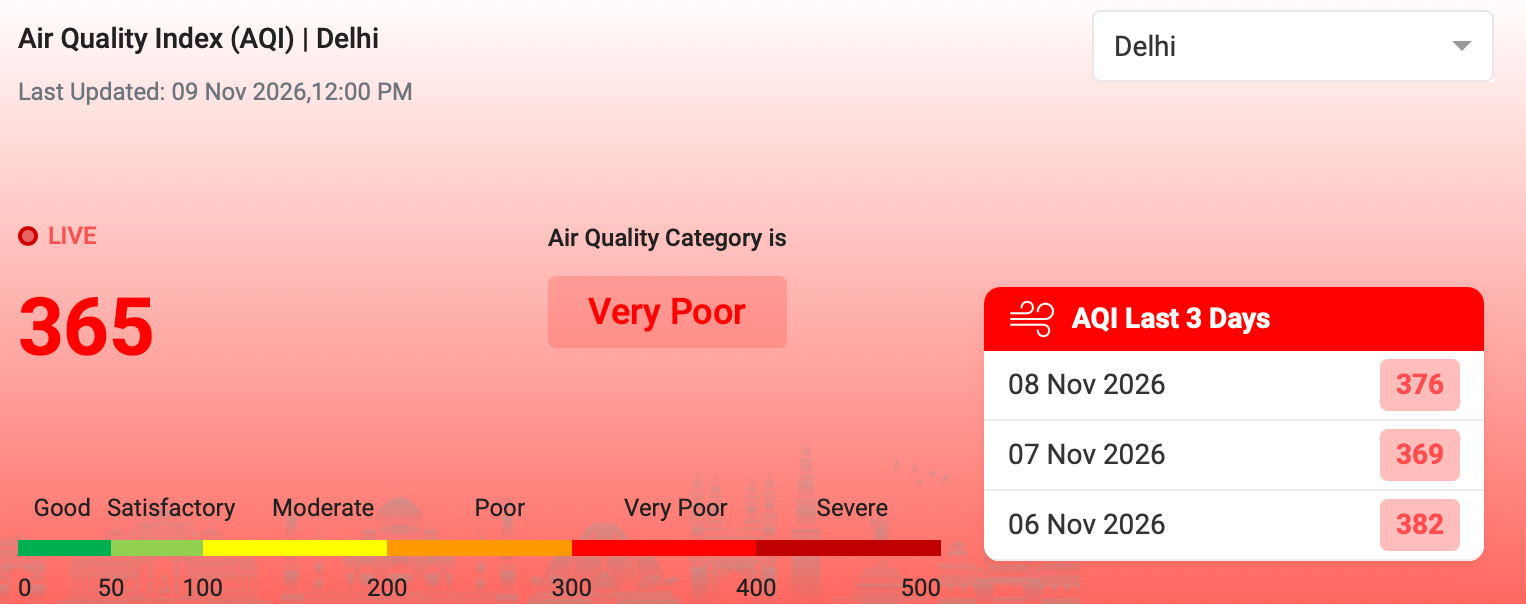
Charting high on most lists of the world's most polluted cities, Delhi's air quality has deteriorated sharply, with pollution levels remaining a concern across the capital. According to real-time data, as of writing this article, AQI.in reports a "Hazardous" number of 326, while the Central Pollution Control Board (CPCB) reports 365. However, these numbers are the more ameliorated reports as the day progresses.
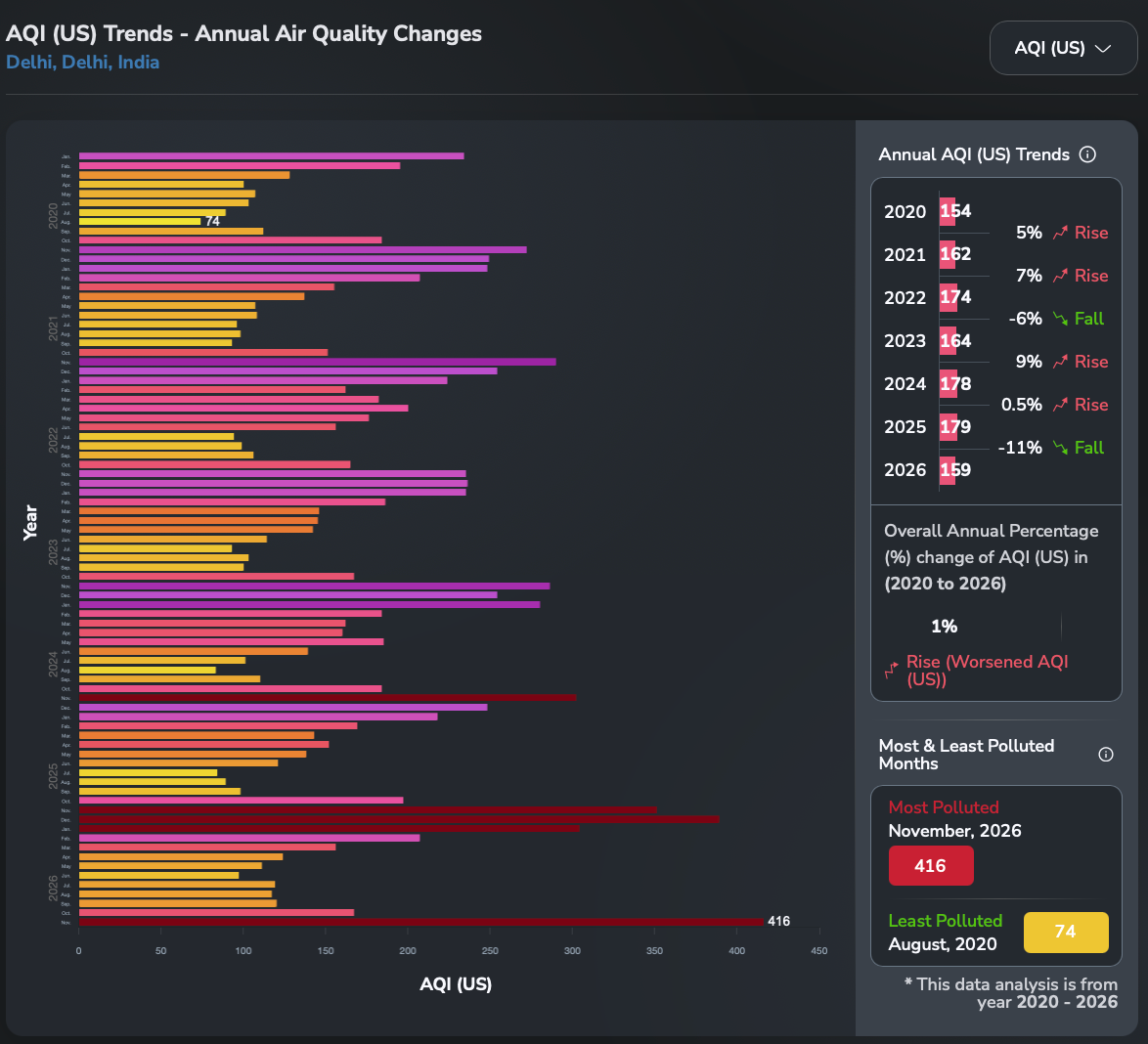
AQI.in alone reported the dailyDelhi AQI at 470 on November 8, i.e., on Diwali, and so far, the website already calculates a November monthly value of 416, up from October's 167. The CPCB reported a similar monthly low in October at 153, and in November, AQI was 376. However, on November 9, the highest AQI recorded by the CPCB was a whopping 406 (at 4:02 a.m.).
One AP interviewee in Delhi commented:
"Because of the pollution there is irritation in the throat and itching in the eyes"
Delhi Air Pollution: Why is Delhi's Air So Polluted?
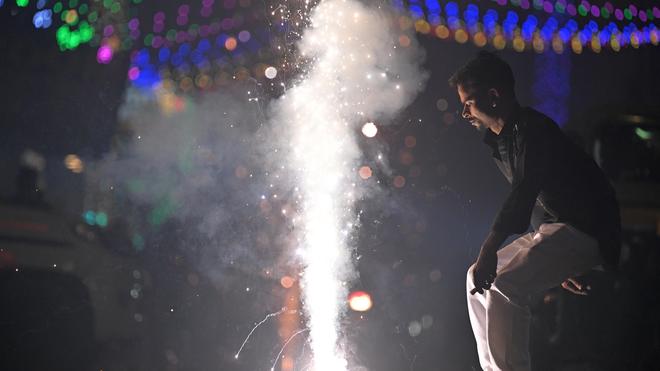
A man bursting firecrackers on Diwali, November 8, in Delhi. (Credit: The Hindu)
With an hourly AQI reported on November 9 by AQI.in as 1760 at 1:01 a.m., Diwali celebrations were, no doubt, among the main reasons behind such exacerbated AQI figures. But theTimes of India suggests that while bursting firecrackers can temporarily increase pollution levels, Delhi also greatly suffers from vehicular emissions. NDTV also highlights this emissions issue, noting that 23% of Delhi's pollution is due to it. With compound Diwali, vehicular emissions, and naturally foggy winters, we get the current Delhi crisis.
Delhi Pollution News
The Supreme Court's 'green fireworks' specifications, 2-3 hour limits for bursting firecrackers, and a 10 p.m. deadline were likely to be taken only as suggestions,as pollution data would suggest. Further, The Hindu reports that many monitoring stations failed to produce pollutant data for hours, casting doubt on the estimates. (At the time of writing, the CPCB website is again failing to display new data; readers are advised to monitor it regularly for updates or corrections.)
Delhi Air Quality Index: Why Are There Multiple AQI Figures?
AQI.in alone has various figures for reported AQI. Readers should be aware that these figures reflect different measurement scales, including an hourly figure, a monthly average, and a daily figure. It is up to the purveyor to choose which they want to follow.
Moreover, a comparison between the CPCB air quality dashboard and private platform AQI.in reveals one of the key reasons behind the striking differences in Delhi's reported air quality levels: CPCB follows the National Air Quality Index (operating between 0–500), and AQI.in follows the US Air Quality Index (allowing readings beyond 500).
Monthly AQI by AQI.in (left); Live AQI Tracking by CPCB (right)
Readers should confirm they are tracking their chosen sites and grasp differences in scale and reporting so they do not mix values across platforms. Anyone may follow any reputable site’s AQI alerts, yet all sources agree that the air quality in Delhi is currently seriously harmful.