Voyager 1 in Focus: A Fantastic One Light-Day Milestone
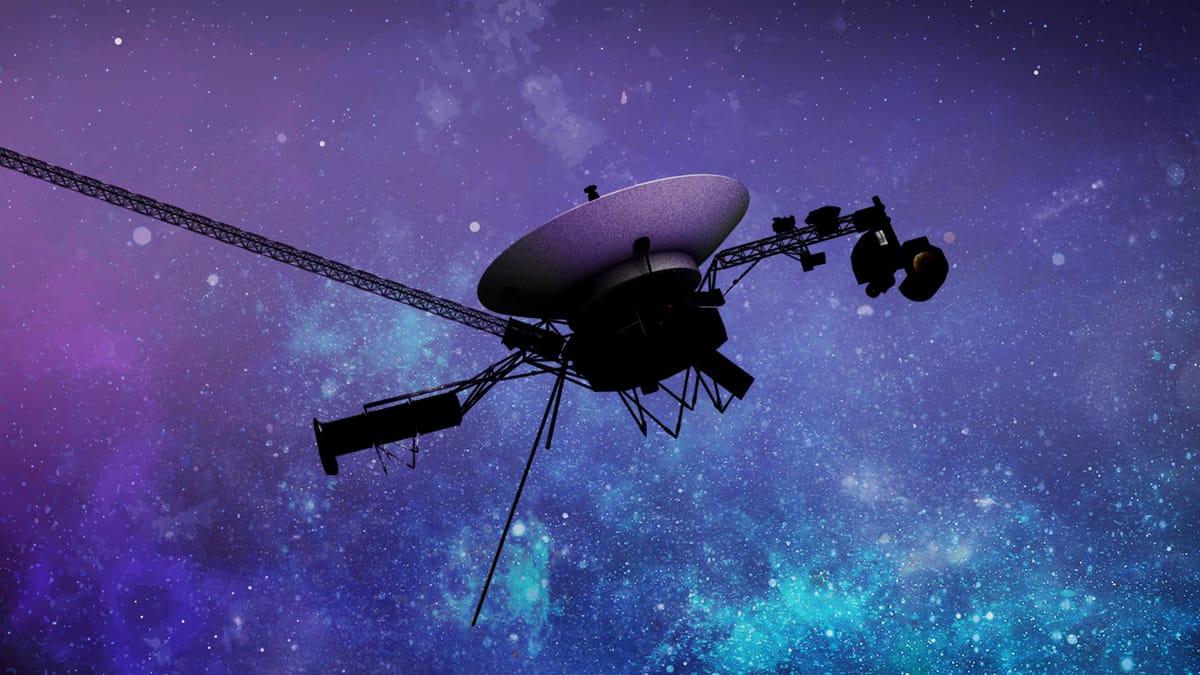
NASA's Voyager 1 has become the first human-made object to reach a distance of one light-day from Earth. After 49 years of travel, the spacecraft is now over 16 billion miles away, carrying the Golden Record as a lasting testament to humanity as it journeys deeper into interstellar space.
Today, November 18, 2026 (3:46 p.m.), NASA's Voyager 1 will become the first human-made object to reach a distance of one light-day from Earth. This historic milestone means the spacecraft is now so far away that a radio signal travelling at the speed of light takes a full 24 hours to reach it, and another 24 hours for a reply to return. After more than 49 years of travel, Voyager 1 is now at approximately 16.1 billion miles, 25.9 billion kilometres from home, about 172 times the distance between the Earth and the Sun.
Voyager 1's One Light-Day Journey
Launched on September 5, 1977, Voyager 1 has been travelling through space for nearly five decades. It crossed the heliopause in August 2012, becoming the first spacecraft to enter the interstellar medium. To put its current distance into perspective:
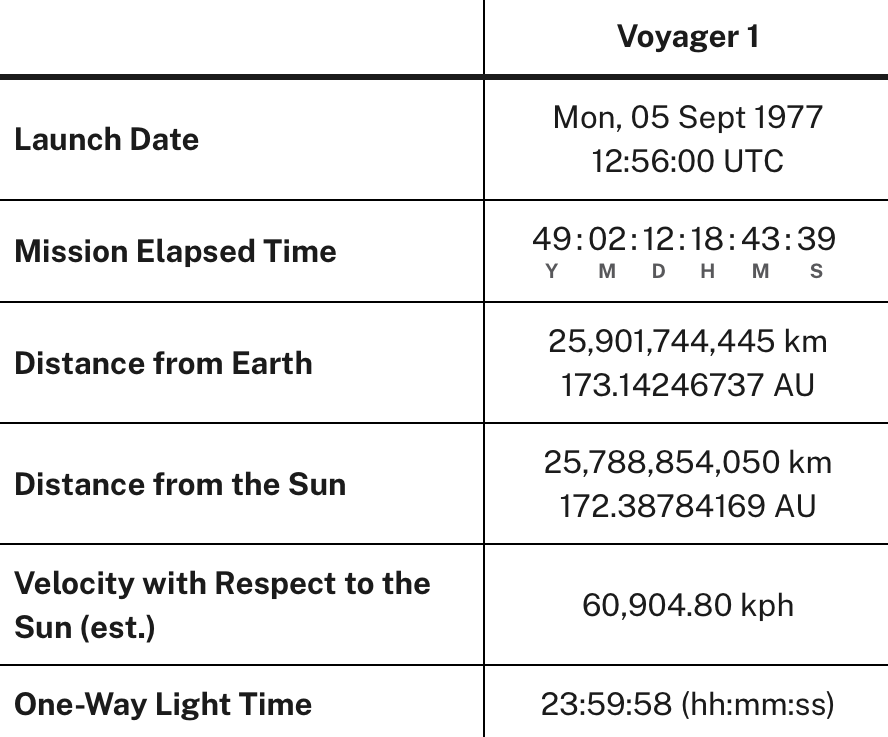
Voyager 1's cosmic odometric details on Nov 18, 13:06 p.m. (Credit: NASA)
Coursing through the vacuum of space at nearly 38,000 miles per hour, the spacecraft has become the first human-made object to operate outside the heliosphere. While this distance is a monumental achievement for humanity, it also highlights the vast scale and incredible speed of the cosmos. Voyager 1 will take 40,000 years to pass within 1.7 light-years of the star Gliese 445 in Ursa Minor.
Golden Disk
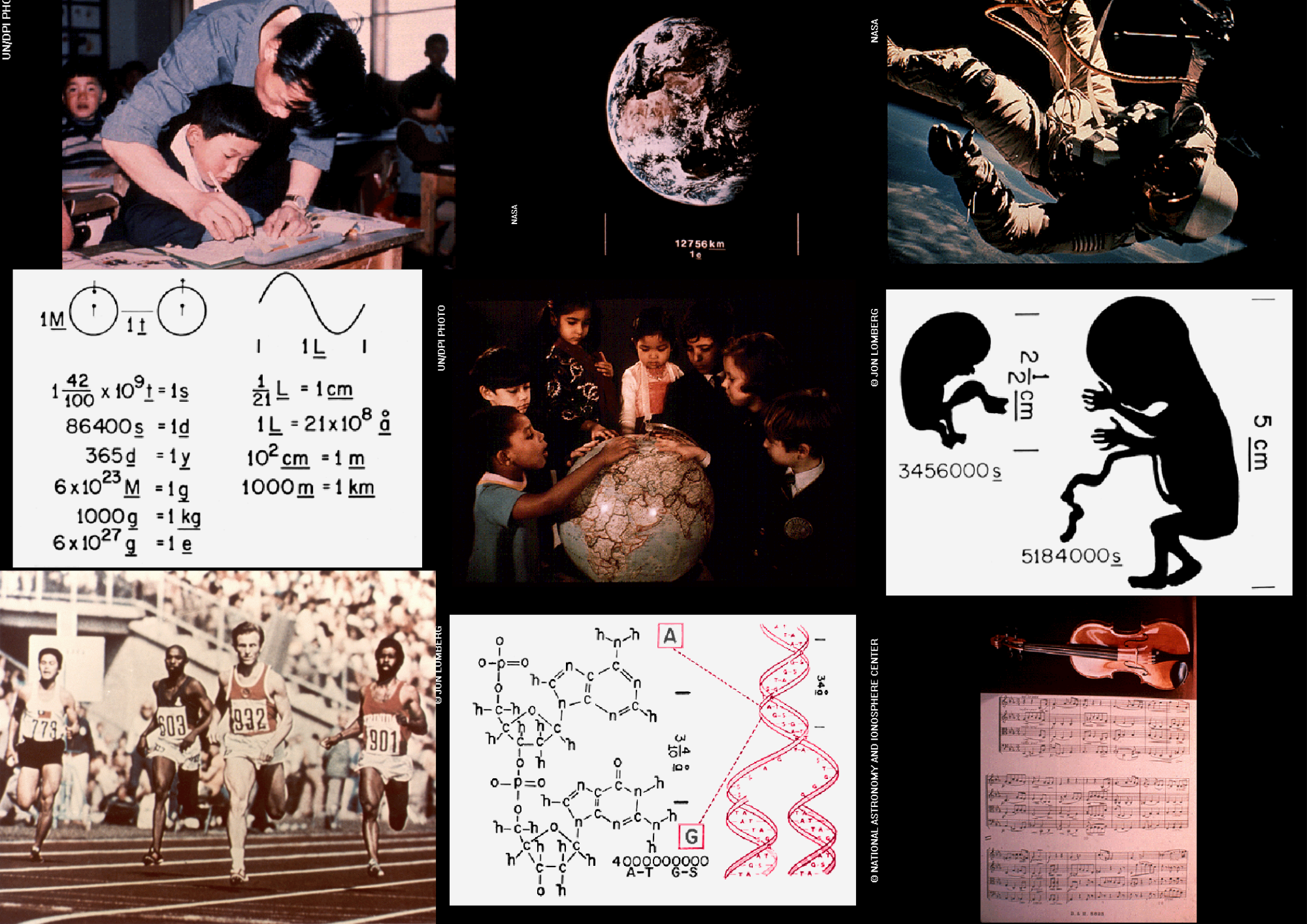
Aboard Voyager 1 is the Golden Record, a 12-inch gold-plated copper photograph disk designed as a time capsule for any extraterrestrial intelligence that might one day find the spacecraft. NASA curated this ambitious message to portray the diversity of life and culture on Earth (including Surshri Kesarbai Kerkar’s 3:30-minute raga “Jaat Kahan Ho,” and other Indian audio curated by Bishun Khare, a senior physicist at the Laboratory for Planetary Studies). The record contains a carefully selected collection of sounds and images, serving as a lasting testament to humanity as the globe travels deeper into the cosmos.
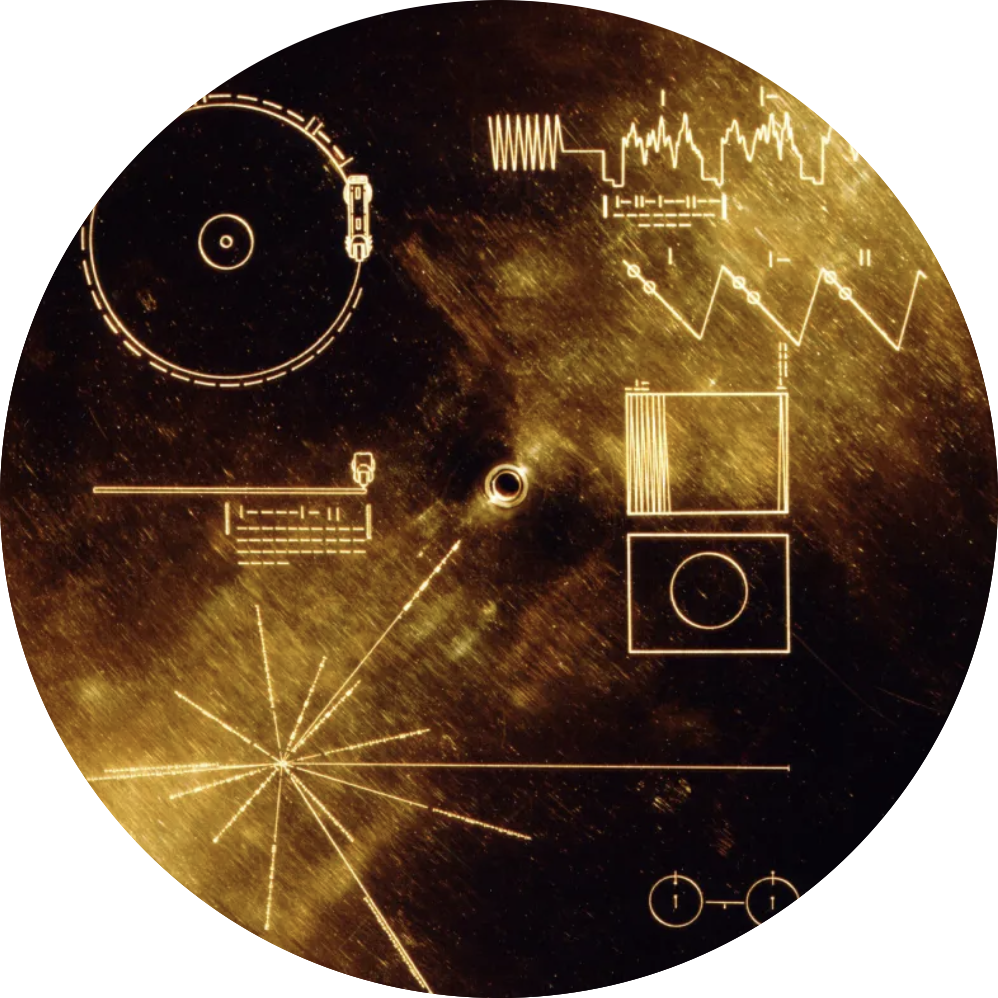
Golden Record Cover (left); Collage of some images encoded on the record (right). Credit: NASA
Shine Bright for Voyager’s Light-Day
To commemorate Voyager 1 reaching the historic one light-day milestone, NASA invites the public to participate in the "Shine Bright for Voyager's Light-Day" event. This global celebration encourages people to shine a light skyward after sunset on November 17 or 18 (depending on your time zone), flashing the spacecraft's call sign—V-G-R—in Morse code. Participants could use an automated flasher on their phones or manually signal with flashlights to join a worldwide wave of light honouring humanity's farthest-reaching spacecraft.