Jayati Bhatia on Women, Representation and Changes in Indian Entertainment
A conversation with Indian actress, Jayati Bhatia reflects on women's representation In Indian entertainment industry. Discover her journey, the changing attitudes towards women in the industry, and her thoughts on challenging societal expectations.
Jayati Bhatia on Women, Representation and Changes in Indian Entertainment (Source: Mid-day)
Jayati Bhatia on Women, Representation and Changes in Indian Entertainment (Source: Mid-day)
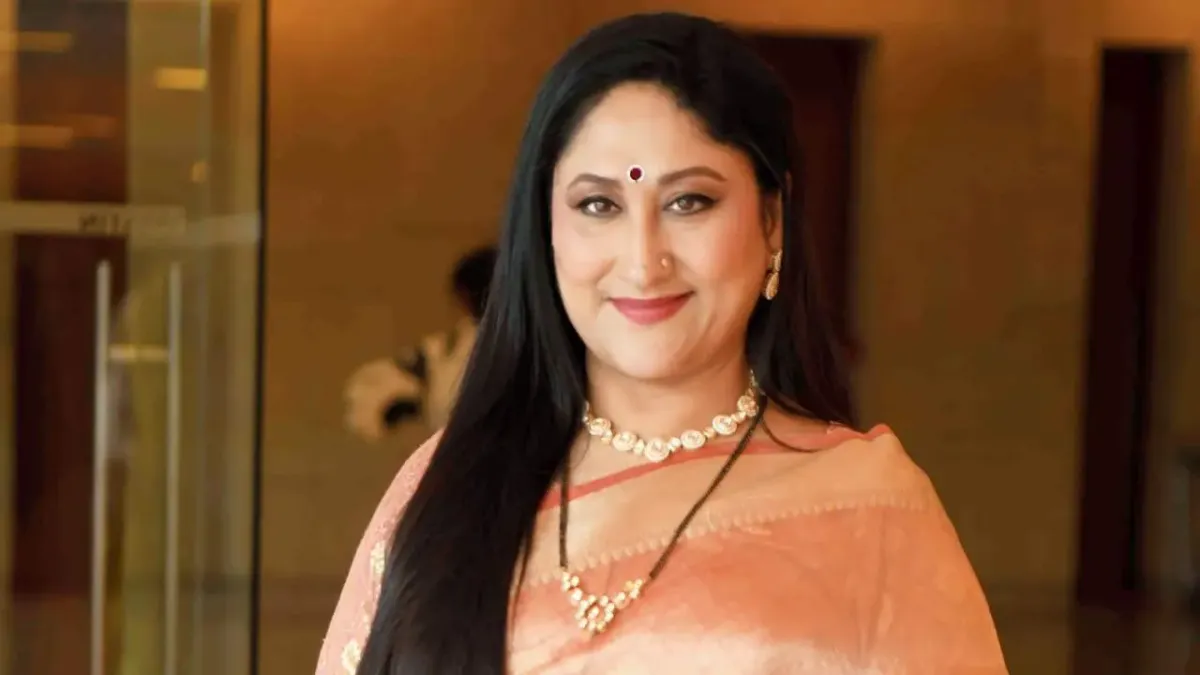
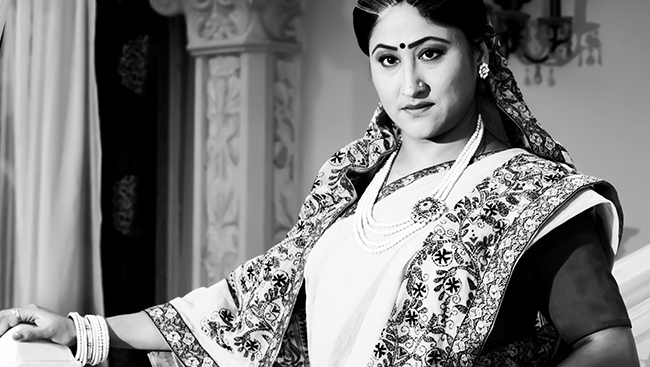
Jayati Bhatia is an Indian actress whose career spans over three decades across theatre, television, films and voice acting. Best known for playing “Mataji” in Sasural Simar Ka and Phatto in Heeramandi, she has established herself as a prominent figure in the Indian entertainment industry. Her journey has been shaped by her passion for acting, encouragement from directors, support from her family and determination to challenge conventional beauty standards and societal expectations of women.
Jayati Bhatia on changes in Indian Entertainment (Source: Darpan Magazine)
The Beginning of Jayati Bhatia's Journey
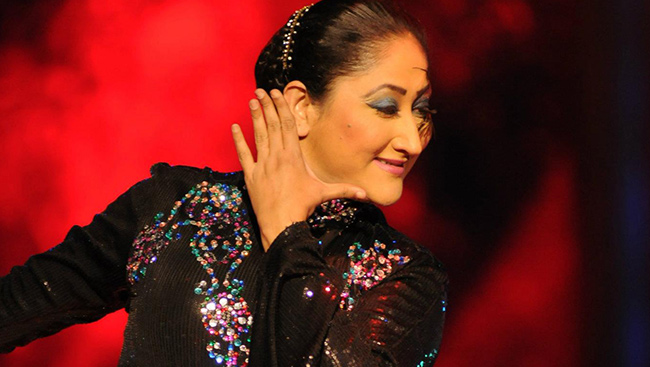
Jayati Bhatia's acting journey began while she was pursuing a degree in English literature and tourism from Delhi University. Years of classical dance had already taught her to be comfortable on stage. She later joined the House of Soviet Science, Culture and Art in Delhi where she got the opportunity to perform in a play, Kya Ye Gustakhi Hai?. It was the time when she was not even aware that competitive theatre existed. Calling it a marvellous experience, the actress said:
It was a dreamlike situation. On the day of the performance, it wasn't stage fear. Once you are on stage, there is no getting out; you have to complete the play.
During the play, her hair had been accidentally cut too short. She was worried that it would upset her mother and her dance guru,Mayadhar Raut, because Odissi requires a specific hairstyle. However, her determination and efforts paid off when she won the Behtareen Adakara award at the Urdu Academy Festival. The prize money was Rs 2,000 which felt like a fortune in 1990. The win made her realise her potential as an actress.
Bhatia credits her four years of rigorous training under the legendary theatre directorEbrahim Alkazi as the foundation that transformed her into a serious actress.
From Theatre to Television: How Evolving Set Environments Help Actresses
Veteran actress,Jayati Bhatia, described the transition from theatre to television as a wonderful yet time consuming experience. . Although seventeen years of classical dance and four years of rigorous training meant the stage held no fear for her, television had its differences. It was television and not films that provided her the roles the actress wanted. Highlighting that eye movements and body language play a vital role on screen, she said:
In front of the camera, it is more the eyes, your intonations, and body language that the camera catches. It is much more subdued.
Her television debut included Itihaas (1996), Yeh Kahan Aa Gaye Hum (1996) followed by Challenge (1998), Kanyadaan (late 1990s), Kaise Kahoon (2000s), Kutumb (2001–2002), Kasautii Zindagii Kay (2000s), Jassi Jaissi Koi Nahin (2003–2006), and Sasural Simar Ka (2011–2018). Her move into films came later, most recently with Rocky Aur Rani Kii Prem Kahaani (2023).
Jayati Bhatia on changes in Indian Entertainment (Source: Darpan Magazine)
The actress further added that on the sets of directors such as Sanjay Leela Bhansali, Reema Kagti and Karan Johar, the atmosphere is much more welcoming these days. The directors or their assistant directors communicate with the actors directly and instruct them which makes acting more easier. Finding it essential to make actors comfortable on the first day, she remarks:
On the first day there is a lot of fear and emotion. Most actors, even experienced ones, are a little nervous the first time they walk on a set. Anyone who says they are not nervous is camouflaging. We are all human beings, and we do have emotions in addition to which we do have to touch others' emotions and psyche as well.
"Change is slow, but it is happening" Jayati Bhatia on the Stereotypes associated with Acting
Explaining why aspiring women actors are still stopped, the Indian actress said that welcoming sets and a change in the mindset of mothers and grandmothers, who in turn change the perception of their husbands are making a difference but it is at a slower rate.
Conducted by Harvard associated economists Robert Jensen and Emily Oster, a study had even shown that Ekta Kapoor’s shows brought about grassroots change in rural areas and communities. With the support of family, both the women in the household and their husbands, women today can work and get an education.
Bhatia further criticises OTT platforms and certain films for objectifying women, saying they have created a male-dominated world and influenced the Gen Z mindset. Before such shows, women's participation in the industry was highly encouraged.
Jayati Bhatia on Women Representation in Indian Entertainment (Source: Hindustan Times)
Sharing her personal experiences, she said that in Bengali families dance, music and painting were encouraged and was never a taboo.
When I came to Mumbai, I was already married. My husband's family had a little problem; we were charting into new territories, going away from families. Very mild opposition. Life was difficult on our own. We were very fortunate. The first month was 1st July, and from 8th August I had started shooting for Ye Kahan Aa Gaye Hum with Mr. Vivek Agnihotri.
The stereotypes often persist until you get your first show and hear phrases such as "Kya kar rahe ho Mumbai mein?" The moment actors are on a show and on screen, parents and relatives are proud, the community changes, and people welcome them. On that note, the actress added:
Becoming an actor is different, but becoming a star is very, very different nowadays.
Marriage, Beauty Standards and Women's Choices are Still a Taboo
Conventional beauty used to be a taboo. According to her, after Jassi Jaissi Koi Nahin, a long list of shows kept an eye on women who are beautiful from the heart. Something else made people want to emulate and become the woman on screen. She told:
Many times I was replaced in different shows because I was not a conventionally good-looking woman. I would be replaced in the middle of an anchoring show because the sponsors thought that I wasn't pretty enough, and they were the ones giving money to produce it. So yes, it happened many times, but talent has won.
Although women are always nurturing, men do not like women who earn their own money or are unable to give time to the family because patriarchy expects women to stay indoors and do household chores. Now, women want to earn their own money. They not just work for five to six hours later take up household responsibilities but in twelve hour shifts without leaves. She discussed that this is true for women in the corporate world too. That is why some women choose not to marry and instead have a companion, friend or lover.
Further, society expects a woman to have a child, and women give birth to one. Motherhood, in her view, is a blessing and a gift, and it is good to take care of the child but being called complete for it or having other accomplishments lowered during the process, is not an acceptable approach. Jayati Bhatia highlights:
I don't want to conform to a society's belief that having a child makes me a complete woman. I would not make myself small or think of myself as incomplete.
Jayati Bhatia on Social Media and an Actress's Life: Scrutiny, Opportunity or Expression
Social media has undoubtedly created a new domain of content curators, where people share their hobbies, activities and perspectives and earn a living. Platforms such as Instagram, Facebook and YouTube are monetised. People build connections yet still engage with others. When one shares one's personal life, criticism is common, so it is important to judge ourselves truthfully and deal with it. Bhatia noted that many actors use social media for music, reels and film promotions, and that few share their perspectives. The Indian actress posts a story about her life once a day, it is often her podcasts or posts that generally represent her life and journey. She remarked:
I am a completely different person from how I portray myself on television. There may be parts of me, but it's not me.
The World of Voice Acting: From Dubbing to Radio
Towards the end of the conversation, Jayati Bhatia remarked on her keen interest in voice dubbing. She came to Mumbai in 1996, motivated by Sachin Pilgaonkar, whom she thanked for trusting her and getting her a voice audition. Although the opportunity did not continue then, she later dubbed voices for the English version of Heeramandi on Netflix.
In the Hindi dubbed version of the Freakier Friday (2025), the actress and voice artist voices the character Tess Coleman. Not confined to Bollywood, Bhatia would like to voice act in animated films and would be honoured to dub for Meryl Streep. Radio shows for the Mahabharata and Ramayana were excellent experiences.
I would love to dub for Meryl Streep. It is a big honour. I am intersted in voice acting for animated films. All experiences had something different. I enjoyed each one of them.