Nepal Floods Leave 903 Dead and 4,247 Missing as Search for Survivors Continues
This article covers Nepal’s devastating floods, the rising death toll, thousands missing, and ongoing rescue efforts.

This article covers Nepal’s devastating floods, the rising death toll, thousands missing, and ongoing rescue efforts.
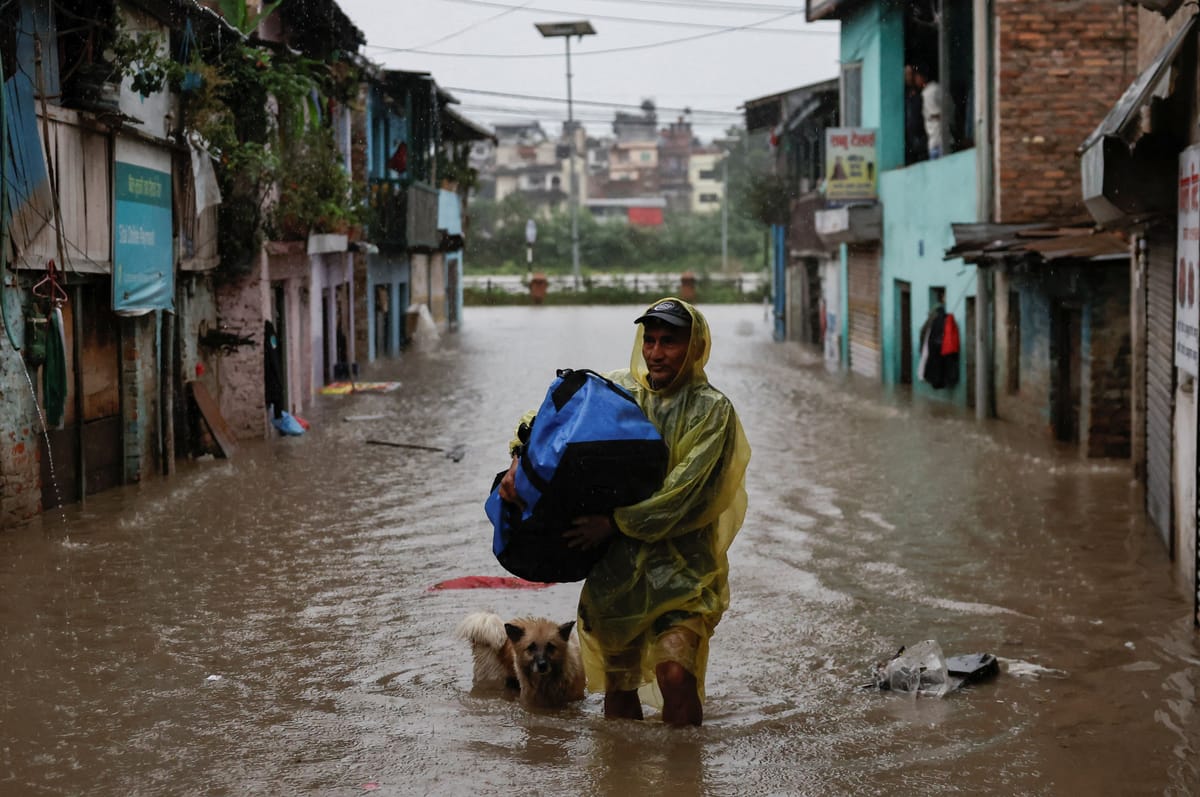
The horrific floods and landslides that struck Nepal on August 26 have now escalated into a major humanitarian crisis, with the death toll rising to 903 and 4,247 people still unaccounted for. As rescue teams race to locate survivors, operations have intensified in the worst-affected districts of Rasuwa and Nuwakot, where hundreds of hydropower workers are feared to be trapped or missing.
The disaster struck areas near Nepal’s border with Tibet after an ice-rock avalanche triggered a powerful debris flow and flooding. The Bhotekoshi and Trishuli river systems carried floodwaters and debris downstream, causing widespread destruction to villages, roads, bridges and hydropower infrastructure.
According to officials cited by Reuters, 933 people associated with hydropower projects remain unaccounted for across the affected region. Rescue efforts are focused on several hydropower sites in Rasuwa and Nuwakot, where workers are believed to have been stranded or trapped in tunnels following the floods. The Nepal Army is leading the rescue operations, using excavators, searchlights and controlled explosions to clear blocked passages.
Rescue teams have entered some tunnels as they continue efforts to determine whether workers remain trapped inside. At the Rasuwagadhi Hydropower Project, an Army-led team searched the tunnel to its deepest accessible point but found no survivors.
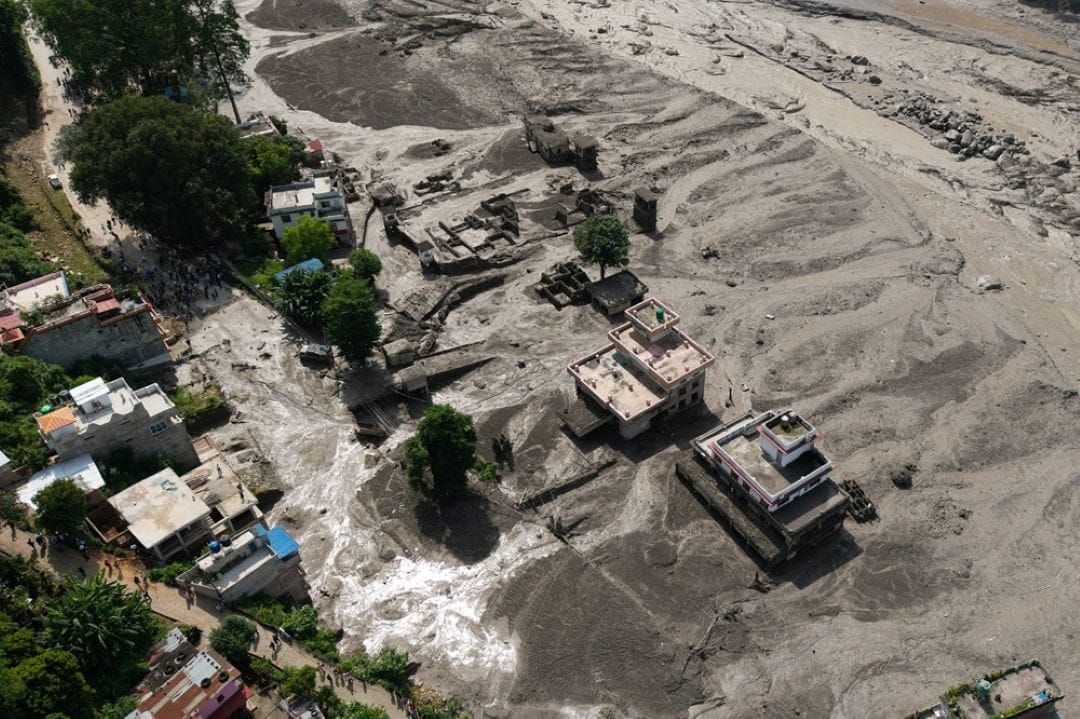
The scale of the debris has made the rescue operation particularly difficult. Large quantities of mud and rocks have accumulated inside tunnels, while damaged roads and difficult mountainous terrain have complicated access to several affected sites. Nearly 21,000 security personnel have been deployed for search, rescue and relief operations.
The latest government figures put the number at 20,819 personnel from the Nepal Army, Nepal Police and Armed Police Force. Authorities said 10,451 people had been rescued, while hundreds of helicopter flights have also been carried out as part of the response.
The disaster was triggered by an ice-rock avalanche following the collapse of part of a glacier near the Nepal-Tibet border. The resulting debris flow swept through the mountainous region and caused extensive damage along the river system. Experts have also raised concerns about the growing instability of high-altitude environments in the Himalayas, although the precise contribution of climate change to this particular event remains under assessment.
More than 90,000 people have been affected by the disaster, according to the Red Cross. Villages and infrastructure have suffered extensive damage, while roads and bridges have been destroyed or blocked, making it difficult for rescue teams to reach some areas. The situation remains dangerous even as rescue operations continue. Authorities are monitoring newly formed lakes and reservoirs near the area affected by the glacier collapse, amid concerns that a breach could cause further flooding downstream.
Additional landslides and unstable terrain are also posing risks to rescue teams and communities in the region. The disaster has also affected neighbouring Tibet. Chinese authorities have reported 16 deaths and 546 people missing on their side of the border. These figures are separate from Nepal’s official toll.
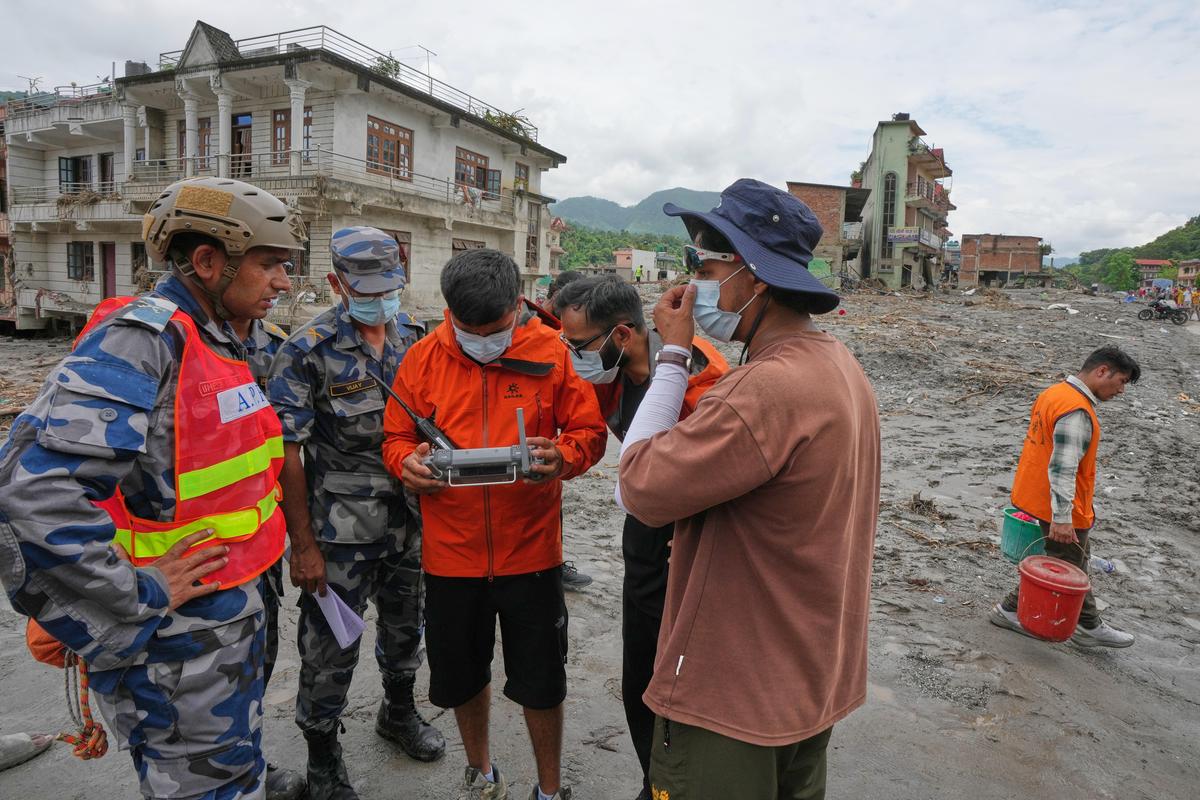
China has deployed more than 2,100 rescue workers and allocated around 220 million yuan for relief efforts, according to Chinese state media. India and China have also provided assistance and technical expertise for rescue operations at affected hydropower sites in Nepal. Nepal Prime Minister Balendra Shah has described the floods as an “unprecedented and devastating natural disaster” and said assessing the full extent of the damage remains challenging.
The disaster has also renewed concerns about the vulnerability of Himalayan communities and infrastructure to glacial and other mountain hazards. Nepal has previously called for stronger systems to monitor glaciers and improve the exchange of information on potential hazards in the region.
For families of those missing, the immediate priority remains finding their loved ones. Authorities are continuing searches, while hospitals and other facilities are also working to identify recovered bodies. The latest government figures show that unidentified remains are being kept at hospitals across several districts as identification efforts continue.
With thousands of people still unaccounted for and hundreds of hydropower workers among those missing, Nepal’s rescue effort remains a race against time. Rescue teams continue to search affected areas and clear debris while authorities remain alert to the threat of further flooding, landslides and other hazards across the Himalayan region.
Also read: Nepal Floods: Devastating Toll Crosses 630, Nearly 3,000 Missing
Explore our upcoming features, author interviews, and deep-dives into new policy reforms.