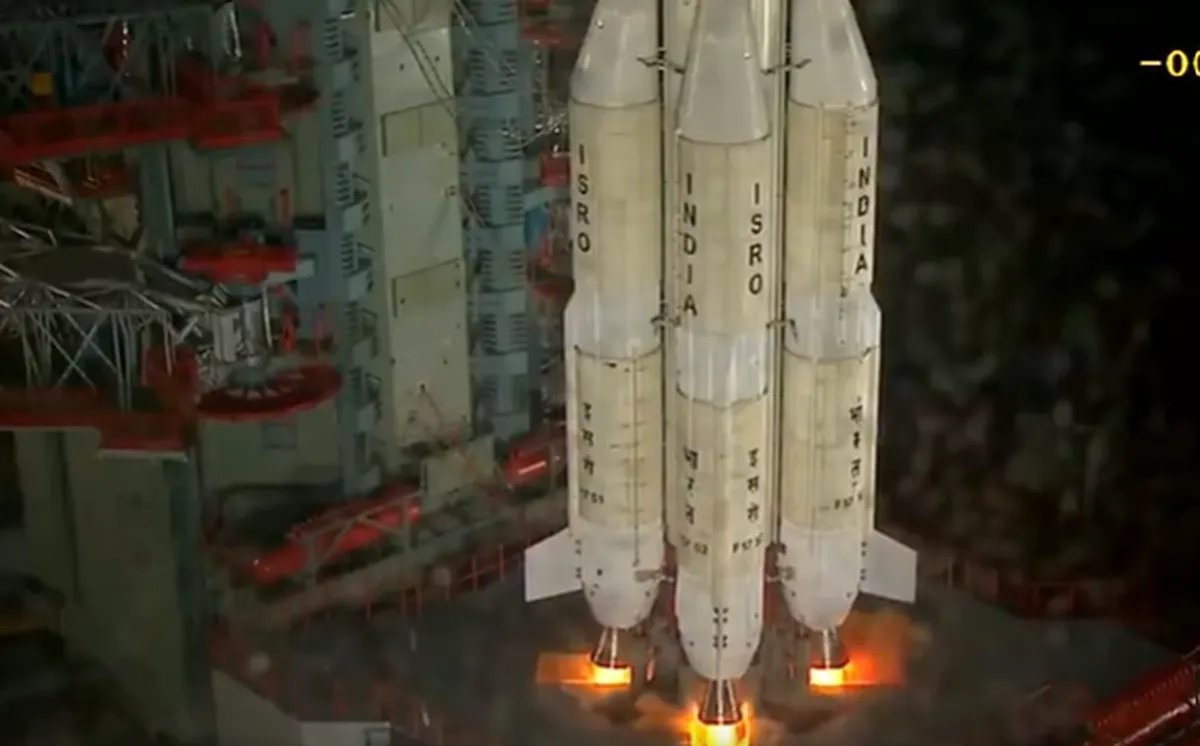
Another successful satellite launch from ISRO, EOS-05 now in space
This article covers ISRO’s successful GSLV-F17 launch carrying the EOS-05 Earth observation satellite, its key features and applications, reactions to the mission and what lies ahead for India.
ISRO successfully launched the GSLV-F17 rocket carrying the advanced Earth observation satellite EOS-05. It was launched on September 4, 2026, at 2:55 AM from Shriharikota. The EOS-05 is India’s first-ever imaging satellite to monitor from Geosynchronous orbit, about 36,000 km above the Earth.
"I am very happy to announce that the GSLV-F17 vehicle has successfully and precisely injected the advanced Earth observation satellite EOS-05, the Geo-Imaging Satellite, into the intended and required orbit," ISRO Chief Dr V Narayanan said.
He added that this was the 107th launch from the spaceport in Sriharikota and the 19th GSLV mission.
EOS-05 Earth Observation Satellite
EOS-05 is an advanced Earth observation satellite developed by ISRO, the Indian Space Research Organisation, and is the primary payload of the GSLV-F17 mission. It is designed to observe and capture images of the Earth from geosynchronous orbit. This data can be useful for monitoring and understanding the planet’s surface and can support areas such as agriculture, natural-resource monitoring, environmental studies, urban planning and disaster management.
Why is EOS-05 Important?
EOS-05 is important because of the orbit in which it will operate. The satellite has been placed in a geosynchronous orbit, allowing it to stay focused on a particular region of the Earth for longer periods. This can be useful for regular monitoring and collecting images of the same areas over time. The mission also adds to India’s Earth observation capabilities and reflects ISRO’s growing ability to develop satellites for different practical applications.
EOS-05 Mission Draws Praise Across the Country
The achievement highlights the hard work and dedication that went into the mission, with years of planning and testing behind the successful launch. Mission Director Thomas Kurian also highlighted the scale of the mission, particularly the advanced imaging capabilities of EOS-05 and its record-breaking weight for a GSLV satellite launched into GTO or sub-GTO orbit.
It is a moment of great pride and happiness for all of us. The success of GSLV has completed its 19th mission, and the mission carried the EOS-05, a uniquely configured Earth observation satellite capable of near-real-time imaging. It is the heaviest satellite ever launched by GSLV into a GTO or sub-GTO orbit. A launch lasts only a few minutes, but behind those few minutes are months and years of rigorous effort," Thomas Kurain, mission Director for the GSLV-F15 rocket mission, said.
The successful launch also drew praise from leaders across the country. Prime Minister Narendra Modi called the achievement a moment of pride for India, while Union Minister Jitendra Singh described it as “another giant leap for India in Space” and congratulated the ISRO team on the successful mission.
Another giant leap for India in Space!
Kudos to Team @isro on the successful launch of GSLV-F17/EOS-05.
EOS-05 is a state-of-the-art Earth Observation satellite and India’s first imaging satellite from Geosynchronous Orbit, enabling advanced imaging across visible, infrared,… pic.twitter.com/1HHJrWM7ze
With the launch now complete, attention will turn to EOS-05’s deployment and the beginning of its operational life in orbit. The coming period will involve checking the satellite’s systems, calibrating its imaging instruments and preparing it for regular observations. The images and data generated once it becomes fully operational will determine how effectively the satellite can be used for its intended purposes.