News
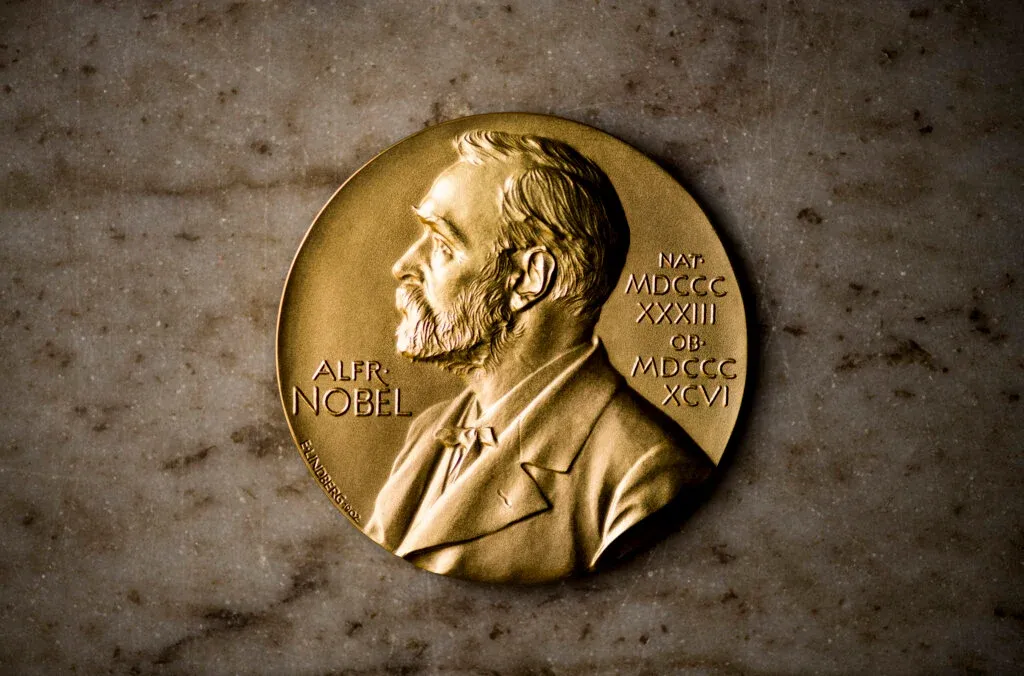
These 2026 Nobel Prize winners are pushing the boundaries of still-underexplored scientific fields. Francis Halzen of Belgium won the Nobel Prize in Physics for his work on neutrino observation. Henri B. Kagan of France and Kenso Soai of Japan shared the Nobel Prize in Chemistry for their discoveries in organic synthesis. Karl Deisseroth of the United States, Peter Hegemann and Georg Nagel of Germany received the Nobel Prize in Physiology or Medicine for their contributions to optogenetics.
Francis Halzen’s Antarctic Neutrino Observatory
Neutrinos, despite little bearing on everyday life, continue to fascinate scientists since the 1960s, and in their wake have produced at least three generations of Nobel awardees in Physics—Raymond Davis Jr. and Masatoshi Koshiba in 2002, Takaaki Kajita and Arthur B. McDonald in 2015, and now Francis Halzen in 2026.
Simply put, neutrinos are ubiquitous but extremely small and elusive subatomic particles that may reveal great secrets of the universe across billions of light-years. Halzen's own research led to the construction of the IceCube Observatory in Antarctica, which observes these high-energy particles using more than 5,000 specialised sensors embedded in 2,500-metre-deep boreholes beneath a cubic kilometre of ice.
These sensors detected the faint signals produced when neutrinos interact with the ice, allowing scientists to trace their origins. Detecting these particles might point towards major cosmic phenomena, including supernovas, black holes, and gamma-ray bursts. (Reuters)
This may effectively change how space is mapped and how space events are understood, possibly expanding the possibilities of astronomical research. With the IceCube-Gen2 expansion to 8 cubic kilometres of ice, it is only a matter of time before neutrino research makes even more headlines.
Henri B. Kagan and Kenso Soai’s Mirror-Image Molecules
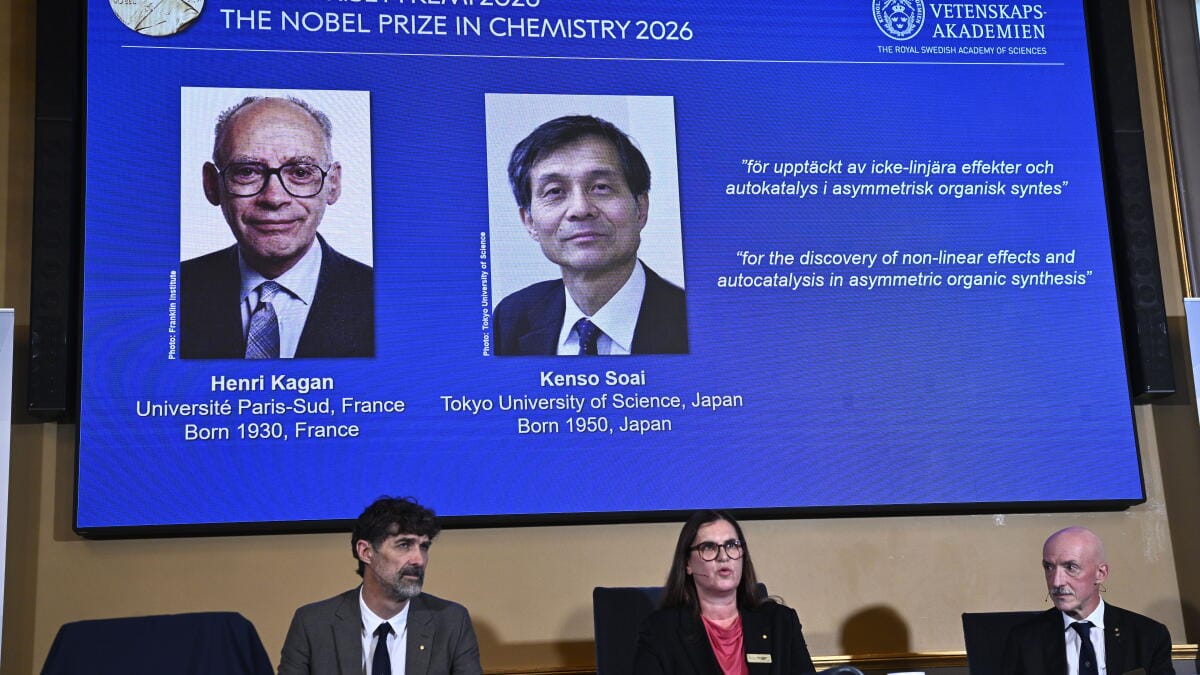
Amino acid molecules, essential for building proteins and, by extension, fundamental to human biology, exist in mirror-image versions, and the natural production of the required molecules is so refined that only the 'right' type of molecules is produced and not the other. Artificial productions, such as the pharmaceutical kind, however, aren't so sophisticated.
As such, chemists will always produce 50:50 mixtures of these chiral (i.e., mirror-image) molecules. Both kinds will have the same composition, but their 3D arrangements will differ, and so too will their effects on the body. To that extent, the inclusion of the wrong chiral copy of a required molecule in medicine can have adverse or even fatal consequences.
Kagan made a breakthrough by demonstrating how chemical reactions could produce one mirror-image version in greater yield than the other. Thereafter, Kenzo Soai took it further, developing an asymmetric autocatalytic reaction that produced only one chiral form, to the exclusion of its mirror image. Now called the Soai reaction, marked a significant advance in understanding, reproducing, and manipulating molecular handedness - a contribution recognised by the Nobel committee as being the first of its kind.
"Other than life itself, no one had ever achieved this feat."
Nobel Prize Organisation, referring to the Soai reaction
The implications of these discoveries extend far beyond the laboratory, opening new avenues for pharmaceuticals, flavours, scents, and new materials. Moreover, it lays new ground for research into one of science's most enduring questions: what is life made of?
Nobel Prize Winners 2026 : Karl Deisseroth, Peter Hegemann, and Georg Nagel’s Optogenetic Progress
If neutrinos will help map the universe, optogenetics will help map the brain. In practice, it enables precise, rapid control of neural signals using light and can be used to demonstrate how neural circuits respond to stimuli. But what set Deisseroth, Hegemann, and Nagel's work apart from others in the field was their attuned, focused effort to reconcile neurobiology and microbiology.
Hegemann and Nagel had initially discovered a light-gated protein, channelrhodopsin, in Chlamydomonas, a single-celled alga, which produced an electric impulse. Since then, other opsin expressions (bacteriorhodopsin and halorhodopsin) have been studied and tested, including Deisseroth's experiment of artificial channelrhodopsin gene introduction in rats' nerve cells. Similar light sensitivity was found in this case and was later extended to work in the brains of living mice.
Such advancements in optogenetics can allow neuroscientists to study brain activity like never before, possibly shedding light on understudied brain activities and neural circuits, as well as neurologic and psychiatric disorders, and even helping restore sight to the visually impaired.
Also Read: BRICS Traditional and Indigenous Sports Demonstration Games 2026 to be held in Ahmedabad
Members Discussion