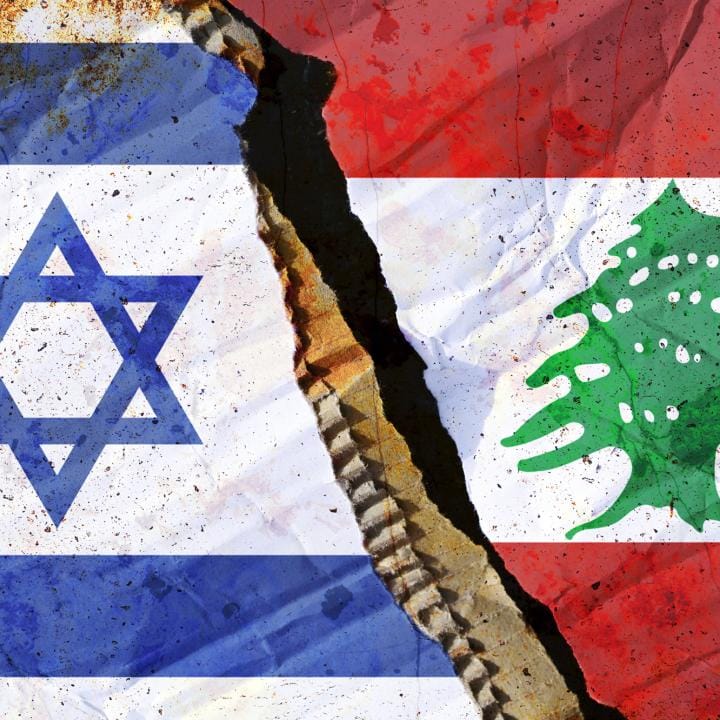
The Israel-Hezbollah Conflict: Another War In The Making?
Cross-border strikes between Israel and Hezbollah intensify despite a fragile US-Iran ceasefire. Rising displacement and deeper strikes signal a volatile conflict with risks of wider escalation.
For nearly 3 years, the Israel-Lebanon border has not seen peace. First with the Israel-Gaza War, followed by the Israel-Iran conflict, Lebanon has openly opposed Israel's policies. This has resulted in almost 3 years of on-and-off strikes and military escalations.
The Fragile Ceasefire
The ceasefire announced between the US and Iran still stands on unsteady foundations. Even as Iran has opened the Strait of Hormuz, the US has not removed its naval blockades on Iranian ports. The negotiations between the two countries have been rather confusing, with Iran denying Trump's claims on the discontinuation of Iran's nuclear program.
However, cross-border exchanges between Hezbollah and Israel continue. Rockets are being fired into northern Israel, and Israeli airstrikes are deep into southern Lebanon and occasionally into Beirut’s outskirts. And like the Iran conflict, Israel is deliberately containing this active warzone.
Expansion Beyond the Border Zone
Earlier escalations between the two countries were characterized by Israel's limited targeting of southern Lebanon. But as of early April, Israel has struck infrastructure linked to Hezbollah beyond immediate border areas, which makes their aspirations of tactical retaliation and pressuring Iran during the negotiations by weakening its allies. Simultaneously, Hezbollah has increased the range and sophistication of its projectiles and is mostly defending.
Civilian Displacement Crisis
Tens of thousands of civilians have been displaced on both sides. Northern Israel has been partially evacuated for almost a year now, and similarly, Southern Lebanon is facing large-scale internal displacement due to constant military activities. Civilian infrastructure has taken a hit, with power grids, roads, and communication networks almost unavailable for use. And due to Lebanon's collapsing economy, people are leaving the country for better opportunities and living conditions.
Risk of a full-scale war?
As the negotiation conversations are still going on, Israel and Hezbollah have been showing relentless retaliation. Analysts have noted that the possibility of a full-fledged war is unlikely, but if this were to escalate to the extent of a war, the results would be worse than the 2006 Lebanon War.
Share this article
The link has been copied!
Members Discussion
Your link has expired. Please request a new one.
Your link has expired. Please request a new one.
Your link has expired. Please request a new one.
Great! You've successfully signed up.
Great! You've successfully signed up.
Welcome back! You've successfully signed in.
Success! You now have access to additional content.
What’s Coming Next?
Explore our upcoming features, author interviews, and deep-dives into new policy reforms.