National Politics
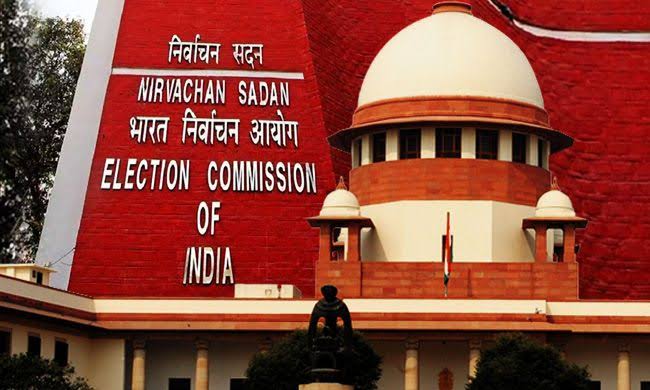

Supreme Court’s Sharp Questions On CEC Appointments Expose The Deepening Crisis Of Trust In India’s Electoral System
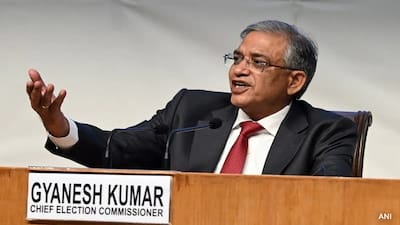

At a time when elections are getting more and more fiercely contested, and political polarization is at its peak, the independence of the Election Commission of India has once again drifted back into national attention. The Supreme Court’s latest observations about how the Chief Election Commissioner (CEC) and Election Commissioners are appointed, have reopened a basic constitutional argument , can an entity meant for conducting free and fair elections stay truly independent, if the government can in practice manage the appointments. The court’s remarks that appear to question the executive’s influence over the selection panel have landed right at the core of India’s democratic credibility. This is no longer just a legal matter, or a simple procedural detail, it’s about public confidence, institutional legitimacy and the coming outlook for electoral neutrality in the world’s largest democracy.

Under the present law that was passed by Parliament in December 2023, the appointment committee for the CEC and Election Commissioners ends up being made of the Prime Minister, the Leader of the Opposition, and a Union Cabinet Minister who is nominated by the Prime Minister too. Critics say this arrangement sort of, mostly, swings the whole process toward the government because two of the three people are from the ruling establishment. They also insist that the opposition’s participation becomes more like a formality , a kind of symbolic gesture, instead of something that actually carries weight. Even the Supreme Court has basically said the obvious part, ministers are naturally expected to line up with the Prime Minister, so any disagreement from the opposition turns out to be largely pointless. So in the end, what’s left isn’t a genuinely independent selection mechanism, but rather just the look of consultation.
From Historic Judgment To Political Reversal
The controversy becomes even sharper when seen against the backdrop of the Supreme Court’s landmark March 2023 judgment. In that historic ruling the court had directed that appointments to the Election Commission should be made by a panel made up of the Prime Minister, the Leader of the Opposition and the Chief Justice of India (CJI) until Parliament enacted a law on the matter. The judgment was widely celebrated as a bold attempt to insulate the Election Commission from excessive executive influence, and also to strengthen institutional independence.


But then, within a few months, the government introduced and passed a new law, replacing the Chief Justice of India with a Cabinet Minister. The opposition said it was a direct dilution of judicial safeguards. Meanwhile, constitutional experts described it as a step backward, for democratic accountability.. The government defended the change by saying that appointments are part of the executive sphere, and that judicial participation is not mandatory in every constitutional proceeding.
Now, during the ongoing hearings, the Supreme Court has clarified that the CJI does not have to actually be part of the panel, not always, any way. But, importantly, the court has stressed that there should be at least one independent member in the committee, so there is real fairness and credibility. This point is pretty important because it points to a broader constitutional idea : impartiality has to start from the very appointment itself, not later on.
Why The Election Commission’s Credibility Matters
The Election Commission is not some normal institution. It is basically the referee of India’s democracy, like, you know, the one that settles the rules when everyone is at odds. Every political party, every candidate, and each voter, in the end depends on the Commission’s neutrality, period. If that belief starts to wobble, then the whole democratic structure starts to shake and the ground gets a bit slippery.
Over the past ten years, conflicts between the opposition parties and the Election Commission have become more and more familiar, sometimes too familiar. Questions keep popping up around the moment elections are announced, how Model Code of Conduct violations are managed or handled, whether action is taken for hate speech, the EVM controversies, and even claims about uneven or inconsistent enforcement. The Commission has defended its working again and again, but still the perception contest, the narrative fight, has become hard to dismiss.
That is precisely why the Supreme Court’s observations carry enormous significance. The court has not accused the Election Commission of wrongdoing. Nor has it directly questioned the government’s intentions. But it has recognized a deeper reality when appointments appear heavily influenced by the ruling government, suspicions become inevitable regardless of the institution’s actual conduct. In democracy, perception matters almost as much as reality.
The Dangerous Cost Of “Perceived Bias”
The greatest strength of the Election Commission is not its constitutional powers. It is public confidence. The moment citizens begin to believe that the institution is politically aligned, the credibility of elections themselves starts eroding.
This is not merely an opposition concern. It is a national concern. Democracies across the world have shown how quickly public trust can collapse when electoral institutions are viewed as compromised. India cannot afford such a crisis. With nearly one billion eligible voters, India’s electoral system is among the largest and most complex democratic exercises in human history. Even the slightest doubt regarding neutrality can fuel polarization, conspiracy theories and political instability.
The government’s supporters argue that elected governments must naturally have a role in appointments because they are accountable to Parliament and the people. That argument is valid to an extent. But accountability cannot become a justification for unchecked influence. Constitutional institutions are specifically designed to function above political interests. The Election Commission must not only be independent it must also appear independent.
A Moment To Repair Democratic Confidence
The current hearing before the Supreme Court should not be seen as a confrontation between the judiciary and the government. It should be treated as an opportunity to strengthen India’s democratic architecture. An appointment process that includes a genuinely independent member can help restore credibility and reduce unnecessary suspicion.

India’s democracy has survived because its institutions commanded trust beyond party lines. Weakening that trust for short-term political convenience is a dangerous gamble. The debate over the appointment of Election Commissioners is ultimately not about personalities or governments. It is about preserving the sanctity of elections themselves.
Conclusion: Neutral Elections Need Neutral Appointments
A free election does not begin on polling day. It begins the moment those responsible for conducting it are appointed. If the appointment process itself appears politically tilted, doubts will continue to haunt every decision taken by the Commission, no matter how fair it may actually be.
The Supreme Court has delivered a reminder that democracy cannot function on “managed neutrality.” India does not merely need an Election Commission that is independent on paper; it needs one that inspires unquestioned confidence in the minds of citizens. Because once public trust in elections begins to fade, democracy itself enters dangerous territory.
Members Discussion