National Politics
The Uniform Civil Code (UCC) movement which seeks to establish one set of personal laws that will cover marriage, divorce, inheritance and adoption for all Indian citizens has resumed its role as the main topic of discussion within India's legal and political systems. The concept which originates from Article 44 of the Indian Constitution has faced continual debate since its inception yet the country has never executed it as a complete national policy. The Bharatiya Janata Party maintains its UCC expansion plans which began in Uttarakhand as the first state to implement a UCC system and which now includes Gujarat as its second state target and in Madhya Pradesh a six members committee is formed. The UCC debate reaches a critical point after citizens contributed their opinions and the judiciary supported previous decisions and political leaders made electoral commitments while the debate keeps moving between three main issues which include equality, diversity and constitutional purpose.
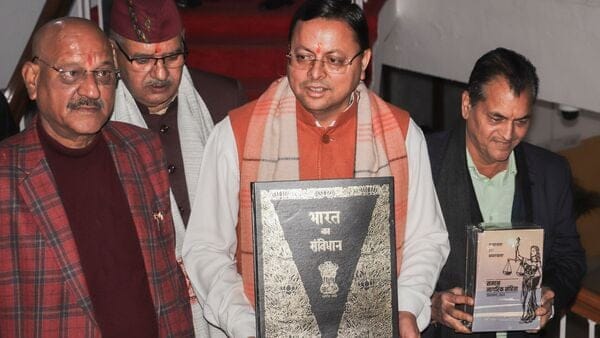
What is Uniform Civil Code
By definition a Uniform Civil Code is a term that means there will be one set of laws for all people no matter what religion they belong to when it comes to matters concerning their personal lives like marriage or divorce or inheritances from a deceased ancestor. Right now each religion has its own set of rules for things such as getting married; there is Hindu law, Muslim law, Christian law, etc.
The concept finds mention in Article 44 of the Constitution which directs the State to endeavour to secure a UCC for citizens. However being part of the Directive Principles it is not legally enforceable but serves as a guiding principle for governance.
Why UCC is Needed
The primary argument in favour of UCC is equality before law. A common civil code would ensure that all citizens are treated equally in personal matters, removing discrepancies that arise due to religion based laws.
It is also seen as a step towards gender justice. Many personal laws have provisions that critics argue are discriminatory towards women. A uniform code could standardize rights related to marriage, divorce, and inheritance.
Additionally UCC aligns with the idea of “One Nation, One Law,” strengthening national integration and simplifying the legal system.
What Would Change
If implemented, UCC would replace personal laws with a uniform legal framework. This means:
- Uniform marriage age and registration rules
- Standardized divorce procedures
- Equal inheritance rights across genders and communities
- Common adoption laws
This would significantly alter how personal legal matters are handled in India.
Judicial Push and Some Landmark Cases
The judiciary has repeatedly advocated for UCC over the years. Some landmark cases include:
Mohammad Ahmed Khan v. Shah Bano Begum (1985)
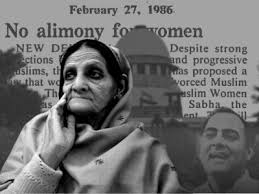
This is perhaps the most famous instance. In a case involving maintenance for a divorced Muslim woman, the Constitution Bench led by Chief Justice Y.V. Chandrachud lamented that Article 44 had remained a "dead letter."
Observation: The Court noted that a common civil code would help the cause of national integration by removing disparate loyalties to laws which have conflicting ideologies.
The Plea: It stated that the State should be charged with the duty of securing a Uniform Civil Code for the citizens of the country
Jose Paulo Coutinho v. Maria Luiza Valentina Pereira (2019)
While dealing with a property dispute in Goa. The Supreme Court praised the Goa Civil Code as a shining example of a functional UCC.
Observation: Justice Deepak Gupta noted that while the founders of the Constitution had hoped for a UCC no "concrete steps" had been taken.
The Plea: The Court highlighted that the Goa model shows it is possible to have a common code for all citizens regardless of religion.
State Level UCC Validation (2023-2024)
The Supreme Court has also dealt with the constitutional validity of states forming committees to implement their own UCCs.
Observation: In January 2023 a bench led by CJI D.Y. Chandrachud dismissed a petition challenging the committees set up by Uttarakhand and Gujarat.
The Ruling: The Court clarified that the Constitution (under Entry 5 of the Concurrent List) gives both the Center and the States the power to legislate on personal matters like marriage, divorce, and adoption. This effectively cleared the legal path for the Uttarakhand UCC (2024) and the Gujarat UCC (2026).
The Inheritance Rights Case (March 2026)
In a very recent and landmark observation a bench led by Chief Justice of India Surya Kant and Justice Joymalya Bagchi described the UCC as the "most effective answer" to address gender bias in personal laws.
The Context: The Court was hearing a PIL challenging the discriminatory nature of inheritance rules under Muslim Personal Law (Shariat).
The Observation: The bench noted that while the judiciary can strike down specific discriminatory practices doing so in isolation might create a "legal vacuum." It suggested that a comprehensive legislative framework (UCC) is the proper way to ensure equality in marriage, divorce, and inheritance.
In the above mentioned cases, the Court underscored the importance of a common civil framework for justice and equality.
Political Engagement and Consultation
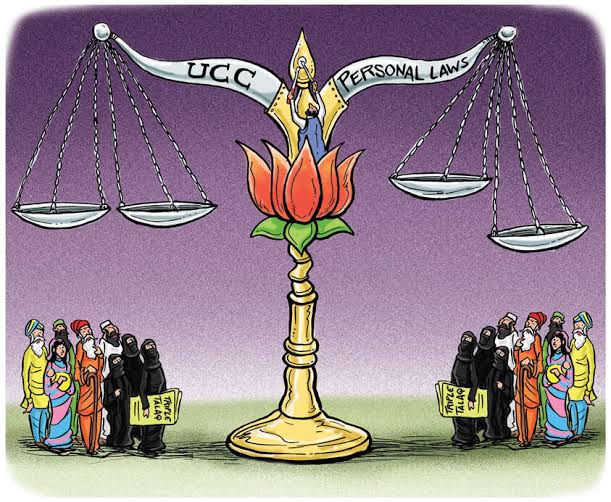
Over time, the Bharatiya Janata Party has incorporated UCC into its electoral platform. In 2023 Law Commission of India issued a public consultation about UCC that received responses from 80 lakh citizens throughout India revealing a mix of support and concerns about the issue.
The large number of people who sent in their responses to the public consultation show that the UCC issue is no longer just a legal issue, but that it is also a broader public discussion.
Goa The Existing Model
Goa remains the only state with a form of UCC inherited from Portuguese civil law. It provides a common set of laws governing personal matters for all residents often cited as a model for national implementation. However even Goa’s system has certain exceptions which critics point out while discussing scalability.
Uttarakhand and Gujarat The New Push
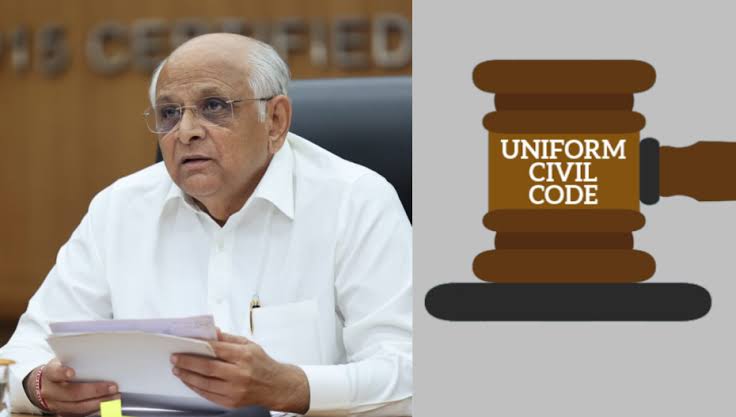
In 2024 Uttarakhand became the first state in independent India to adopt a UCC framework which established marriage registration rules and live-in relationship policies and inheritance guidelines. The policy change created a new testing site which would assess its potential for wider implementation.
Gujarat has initiated its first steps to enact a matching code through its current activities which make it the second state to pursue this objective.
The developments indicate that states will implement their plans before the country adopts its national system.
Benefits of The Uniform Civil Code
- Promotes equality and secularism
- Ensures gender justice
- Simplifies legal processes
- Strengthens national unity
- Reduces legal conflicts arising from multiple personal laws
- The principle of “One Nation, One Law” resonates strongly with supporters who see UCC as a modernizing reform.
Concerns and Criticism
- Despite its advantages UCC faces significant opposition. Critics argue that:
- It may infringe on religious freedom guaranteed under the Constitution
- India’s cultural diversity makes a single code difficult to implement
- Minority communities fear loss of identity and autonomy
- Lack of clarity on the exact framework raises concerns
- Legal experts also caution that a poorly drafted UCC could create more disputes rather than resolving them.
Way Forward
The UCC's future will require finding a proper balance between constitutional principles and real-world circumstances through phased implementation; starting through optional adoption first or at the state level will help achieve this consensus.
Public input, openness of process, and collaborative drafting will be essential elements for gaining acceptance across communities.
The Uniform Civil Code is one of India's most complex and significant reforms as it represents a complete transformation of society due to its effects on identity, equality, and governance, rather than just a simple alteration to existing laws.
As political will continues to build, and states begin utilizing alternative ways of implementing, the discussion has shifted from whether the UCC will go into effect to determining how and when.
Should we develop a UCC without the principles of diversity and fairness intact will be a challenge to continue achieving uniformity of practice throughout the country.
Members Discussion