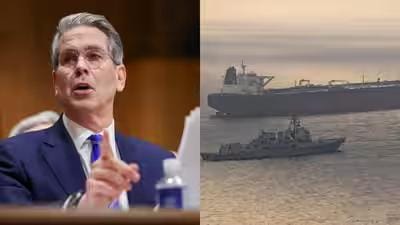
Economic D-Day: US Escalates Pressure on Iran as Tehran Threatens Strait of Hormuz Blockade
This article covers how the US is escalating economic pressure on Iran, Tehran’s threat to disrupt oil exports through the Strait of Hormuz, and the potential impact on global energy markets.
US Escalates Pressure on Iran (source: Social Media)
US Escalates Pressure on Iran (source: Social Media)
The United States is moving toward an “economic D-Day” against Iran, with Washington preparing to impose new sanctions aimed at isolating Tehran economically. The move has triggered a sharp response from Tehran, which has threatened to halt oil exports through the Strait of Hormuz and elsewhere in the Persian Gulf if the US economic campaign continues.
The escalating standoff has placed one of the world’s most important oil routes at the centre of the confrontation, raising concerns over global energy supplies, oil markets and the wider economic consequences of further escalation between Washington and Tehran.
President Trump has dismantled Iran’s military capabilities, destroyed nearly 100 percent of its military factories, and buried its nuclear program.
We are now entering the endgame. At dawn begins an economic D-Day — the single greatest financial offensive ever marshaled against…
— Treasury Secretary Scott Bessent (@SecScottBessent) August 23, 2026
US ‘Economic D-Day’ Explained
In his post on X, US Treasury Secretary Scott Bessent said the Trump administration was “entering the endgame” in its campaign against Iran, describing the upcoming measures as an “economic D-Day.” The measures are expected to target Iran’s financial channels and oil revenues, as well as countries and entities that continue to purchase Iranian oil.
Bessent said the United States would impose the “toughest sanctions in history” on Iran, in an effort to cut off the financial lifelines supporting Tehran’s economy. Ever since February 28, tensions between the US and Iran have remained high, as Washington shifts its focus toward intensifying economic pressure on Tehran.
Importing frozen meat to fix meat prices. Okay, that might work. What’s the plan for bonds, import frozen yields? Frozen homebuyers for housing? Frozen paychecks for wages?
A frozen foreign policy delivers a frozen economy.
— محمدباقر قالیباف | MB Ghalibaf (@mb_ghalibaf) August 23, 2026
Iran Hits Back With Hormuz Threat
Tehran has responded to Washington’s economic pressure with both a warning and a sharp political message. Iranian officials have threatened to halt oil exports through the Strait of Hormuz and elsewhere in the Persian Gulf if the US continues its economic campaign. For instance, Iranian Parliament Speaker Mohammad Baqer Ghalibaf took a swipe at Washington in a post on X, sarcastically questioning whether importing frozen meat could solve rising meat prices in the US.
He used the analogy to criticise what he described as Washington’s “frozen” policies, warning that the “Iran boomerang” could eventually turn the pressure back on the United States. Together, the statements signal Tehran’s readiness to respond to Washington’s economic pressure through both economic retaliation and political rhetoric.
What Lies Ahead for the US-Iran Standoff?
The widening US-Iran standoff could have consequences far beyond the two countries, particularly if disruptions to the Strait of Hormuz further affect global energy supplies and push up oil and gas prices. A prolonged disruption could increase fuel and transportation costs, add to inflationary pressures and create uncertainty across global energy markets.
It could also place Gulf countries such as Saudi Arabia, the United Arab Emirates, Qatar, Kuwait, Bahrain and Oman in a difficult position, as they may face pressure to balance their relations with Washington while protecting their own oil exports and regional security. With the Strait of Hormuz serving as a crucial route for global energy shipments, any prolonged disruption could turn the current US-Iran standoff into a broader geopolitical and economic crisis.