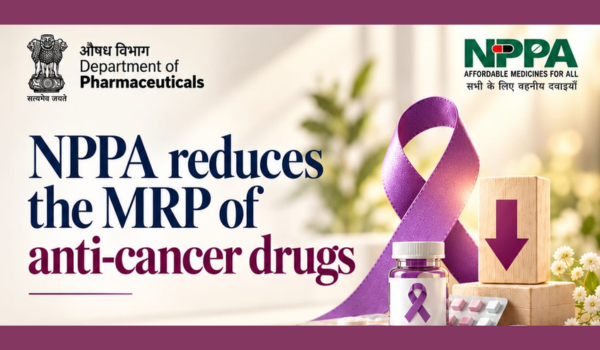
Government Caps Trade Margins on 137 Anti-Cancer Drugs at 30%; New Prices From November 9
India's drug pricing regulator has capped trade margins on 137 non-scheduled anti-cancer medicines at 30%. The revised prices will take effect on November 9, 2026, in a move aimed at making cancer treatment more affordable.
The Centre has capped trade margins on 137 non-scheduled anti-cancer medicines at 30%, with revised prices expected to reduce their maximum retail prices (MRPs) by up to 70%. The National Pharmaceutical Pricing Authority (NPPA), under the Department of Pharmaceuticals, announced the measure on October 17, with the new prices scheduled to take effect on November 9, 2026.
The decision aims to address excessive mark-ups in the medicine distribution chain and reduce the cost burden on patients and their families. According to the government's official announcement, the measure forms part of its efforts to improve access to cancer medicines while ensuring their continued availability.
137 Anti-Cancer Medicines Covered Under New Price Regulation
The revised policy covers a range of non-scheduled anti-cancer medicines, including patented and non-patented formulations. Drugs such as pembrolizumab, ribociclib and abemaciclib are among the medicines identified in reports on the new regulation. These treatments are used in the management of different types of cancer, although their suitability depends on the patient’s diagnosis and treatment plan. The list was recommended by an expert committee constituted under the Directorate General of Health Services, comprising oncologists, medical specialists, hospital experts and government officials.
Anti-Cancer Drug Prices in India May Fall by 70%
Under the Trade Margin Rationalisation mechanism, the NPPA has capped trade margins at 30% under Paragraph 19 of the Drugs (Prices Control) Order, 2013.
Manufacturers have been directed to submit revised prices to the authority within seven days of the notification and publish updated price lists for retailers and hospitals. The revised prices are to be charged from November 9, while state drug controllers will oversee compliance. Consumers can check medicine prices through the NPPA website and the government’s Pharma Sahi Daam application.
Cancer Drug Price Regulation: Ensuring Affordability and Availability
Highlights the need to balance affordable cancer medicines with a stable supply. Effective monitoring, transparent pricing and compliance by pharmacies and hospitals will be essential to ensure patients benefit from the revised rates without facing medicine shortages.