India-China Border Dispute: MEA Highlights LAC Security Concerns
India raises concerns over LAC security amid reported face-offs with Chinese troops, stressing border stability and diplomatic talks.

India raises concerns over LAC security amid reported face-offs with Chinese troops, stressing border stability and diplomatic talks.
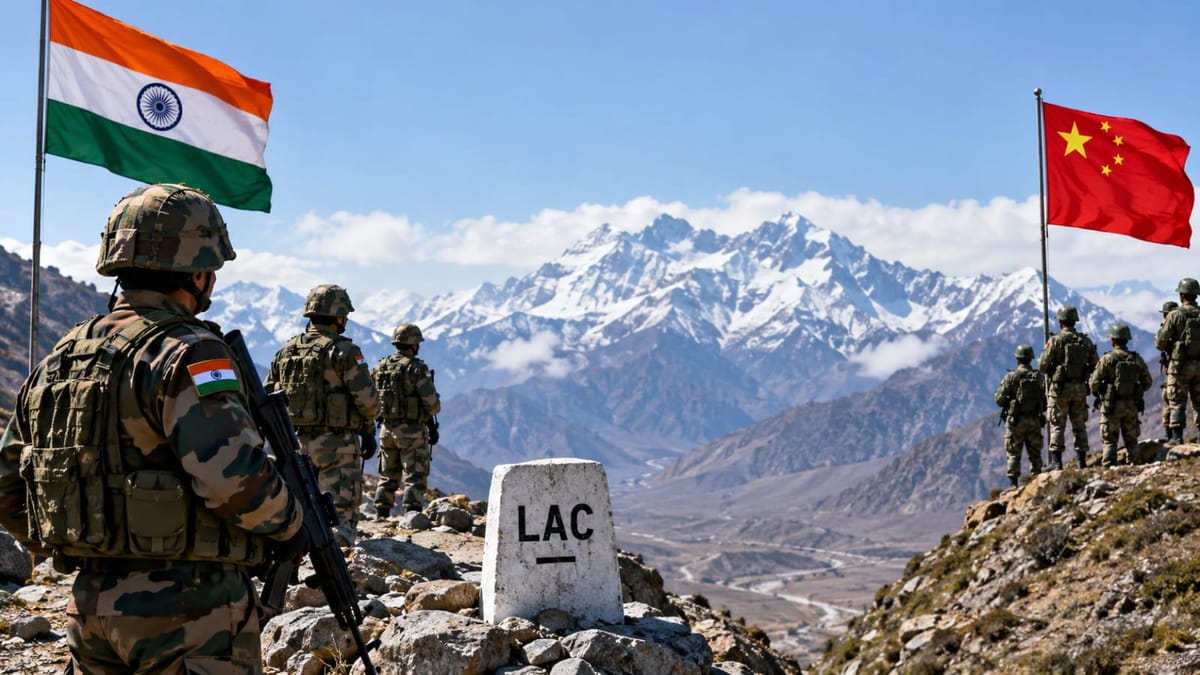
The Ministry of External Affairs (MEA) has expressed concern over recurring disturbances along the Line of Actual Control (LAC), stating that the situation along the India-China border becomes unsettled when Chinese forces deviate from established patrolling patterns. The statement came amid reports of continuing face-offs between Indian and Chinese troops at several locations in Arunachal Pradesh, highlighting the challenges facing border security and bilateral relations.
MEA spokesperson Randhir Jaiswal commented on this matter in a media briefing held on October 23, 2026. Commenting on queries regarding some statements made by the Indo-Tibetan Border Police (ITBP) chief, Jaiswal mentioned that both nations are still using the same diplomatic and military process to sort out their differences and to avoid any misunderstanding or misinterpretation along the LAC.
Furthermore, he stressed the importance of having peace and tranquillity in border regions since this would help in developing the relationship between both India and China. The spokesman mentioned that both parties have decided to consider the methods through which they can better understand the LAC. Jaiswal referred questions about specific face-offs to the Ministry of Defence, without providing further operational details.
The MEA's remarks followed comments by ITBP Director General Shatrujeet Singh Kapur, who said that face-offs between Indian and Chinese forces were continuing at several locations along the Arunachal Pradesh border.
The observations have brought into focus the operational difficulties being encountered by Indian personnel stationed at the sensitive border region in the Himalayas. However, no information regarding the places, context, and nature of the incidents was provided in the MEA briefing. This brings to light the need for proper coordination and monitoring of sensitive border regions to ensure that local skirmishes do not escalate.
Amid the continuing security challenges, the ITBP has been strengthening its operational capabilities through specialised training and modern equipment. Kapur highlighted the force's efforts to adapt to changing battlefield conditions, including the growing importance of technology in border operations.
The force has expanded its drone capabilities and introduced specialised Shaurya commando units to improve its readiness for challenging situations. These measures are intended to strengthen surveillance, operational response and personnel preparedness across difficult high-altitude terrain.
The ITBP plays a key role in guarding India's Himalayan frontier with China, where harsh weather, mountainous landscapes and limited accessibility create significant logistical challenges.
India and China have a long-standing boundary dispute, with the LAC serving as the de facto line separating areas under their respective control. Differences over the alignment of the LAC and patrolling practices have periodically contributed to tensions between the two countries.
The relationship deteriorated significantly following the 2020 clashes in eastern Ladakh, including the deadly Galwan Valley confrontation. Since then, both countries have pursued diplomatic engagement and military-level discussions to manage tensions and address unresolved issues.
Although several confidence-building efforts have aimed to stabilise relations, border management remains a major concern for New Delhi.
India continues to maintain that peace along the border is necessary for progress in its broader relationship with China. Existing diplomatic channels, military consultations and discussions on border management remain important tools for reducing the risk of further confrontations.
The latest MEA statement reinforces India's position that adherence to established arrangements and sustained dialogue are essential to maintaining stability along the LAC. As India and China continue to address their differences, the situation along the border will remain an important factor influencing bilateral relations. Effective communication, vigilance and constructive diplomatic engagement will be critical to preventing misunderstandings and maintaining peace in the region.
Also Read: Typhoon Champi leaves 1 Dead, 500 Injured as it moves towards China
Explore our upcoming features, author interviews, and deep-dives into new policy reforms.