Japan goes to Mars: JAXA launches the MMX Probe to Sample Martian Moon Phobos
Japan’s MMX mission heads to Mars’s moon Phobos to collect samples and uncover clues about planetary formation, the origins of Mars’s moons, and the ingredients for life.

Japan’s MMX mission heads to Mars’s moon Phobos to collect samples and uncover clues about planetary formation, the origins of Mars’s moons, and the ingredients for life.
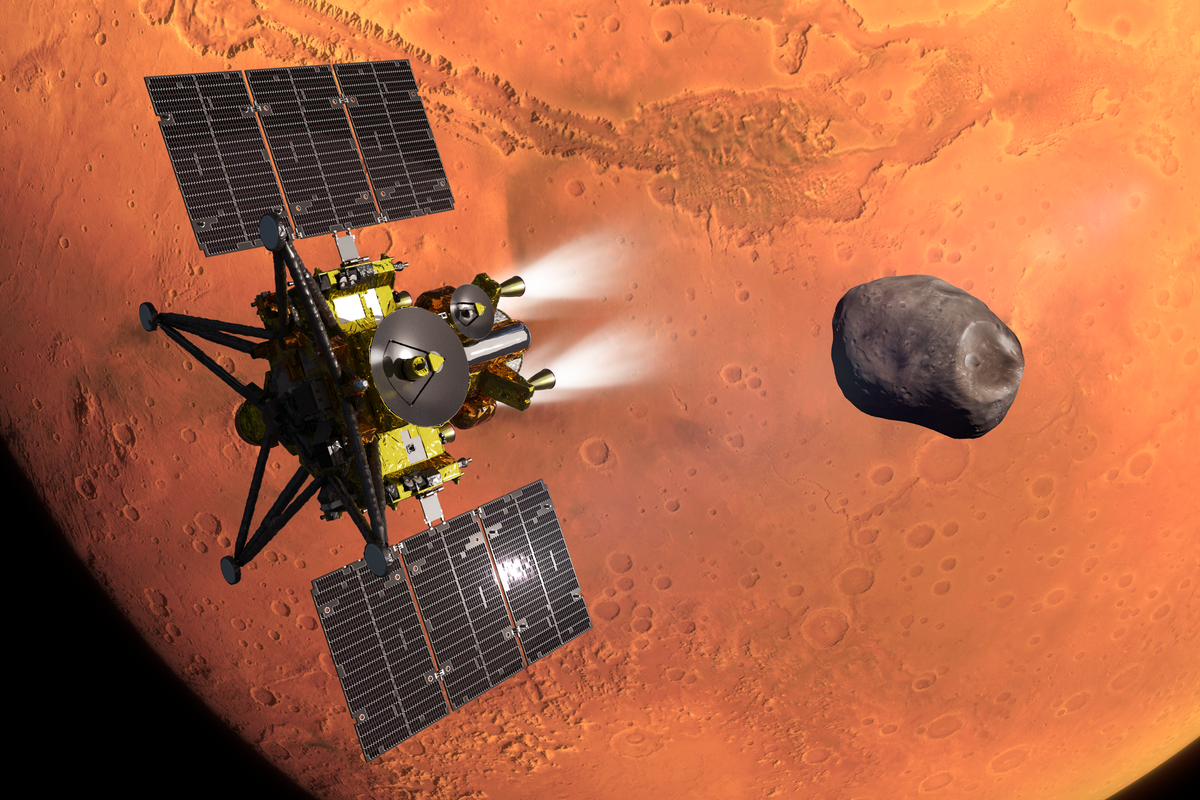
Japan Aerospace Exploration Agency (JAXA) launched a Martian Moons eXploration (MMX) probe on October 20th at 4:41 AM JST (1:11 AM IST). They plan to have the probe return by 2031 with samples from Phobos, one of two Martian moons, and hope it might reveal more secrets of planetary formation and, more excitingly, the possibility of ingredients for life.
Launch of H3 Rocket carrying MMX Spacecraft
Mars has been the subject of space research for a while now, so one might be pushed to question why the Japanese chose to go to Phobos, with a diameter of only about 22.5 Km. According to The Guardian, scientists say that the formation of the moons (Phobos or the smaller Deimos) might provide a little more insight into the origins of life and will also greatly help plan for manned Mars expeditions when they are possible. (Credit: Nicky Fox, NASA)
Aided by NASA, Johns Hopkins Applied Physics Laboratory, and Honeybee Robotics (a Blue Origin company), the five-year mission was set off with the launch of the MMX probe from Yoshinobu Launch Complex at the JAXA Tanegashima Space Centre. In true Japanese fashion, the operation went as smoothly as one could expect, with JAXA project manager Makoto Arita saying that the probe reached its planned orbit with "exceptional precision." (Credit: Anadolu Agency)
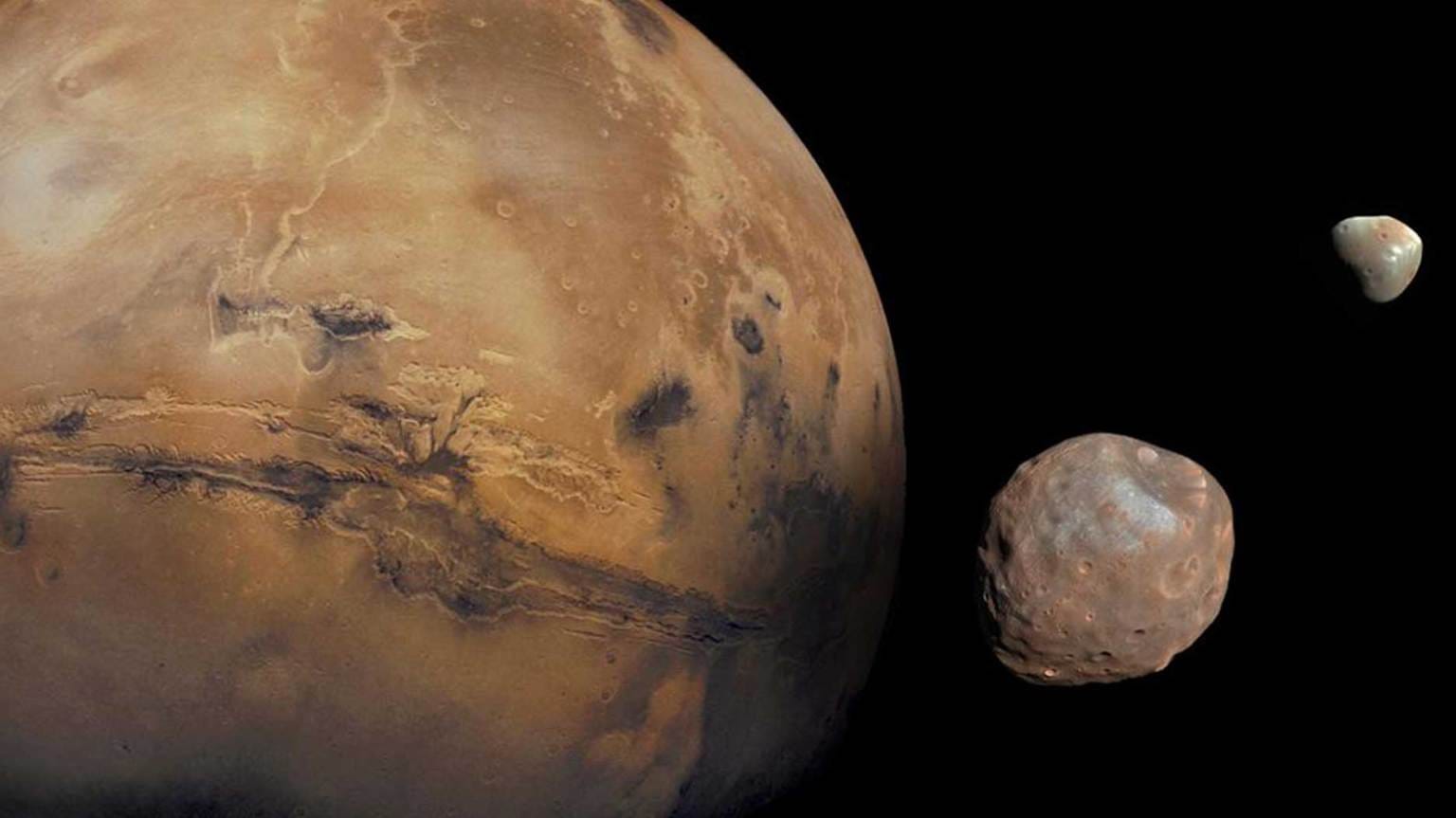
The French-German rover, Idefix, aboard MMX, is expected to reach Martian orbit in 2027 and will first land on Phobos for 1oo days before the main craft arrives to collect a soil sample, and thereafter on Deimos as well. These samples are extremely crucial to the advancement of space research, as the existence of the moons themselves is a subject of much debate: Tom Statler of NASA suggests that the moons could as likely be debris from an impact on Mars or free-flying asteroids captured by Mars. Statler continues, saying that knowing more about these moons might, in turn, help us understand how Earth acquired components necessary to create life.
The spacecraft is fitted with various instruments: two of them being the P-Sampler (devised by NASA) and JAXA’s C-Sampler. Both will work in tandem: the former will produce high-pressure nitrogen bursts to support the latter's core extraction, and the whole process will reportedly take only about 2 hours on Phobos before proceeding to Deimos.
The mission is expected to conclude by 2031, with the probe returning sometime around July, before concluding its flybys. On Earth, 15% of the collected samples will be taken by NASA, which is claimed to be enough for decades of research.
The return journey will be one of the more demanding stages, given that successful atmospheric re-entry is inherently uncertain. However, all eyes are on MMX, hoping for a safe return and a great triumph of scientific research.
Also Read: Asian Para Games 2026: India's Inspiring Gold Medal Victory
Explore our upcoming features, author interviews, and deep-dives into new policy reforms.